


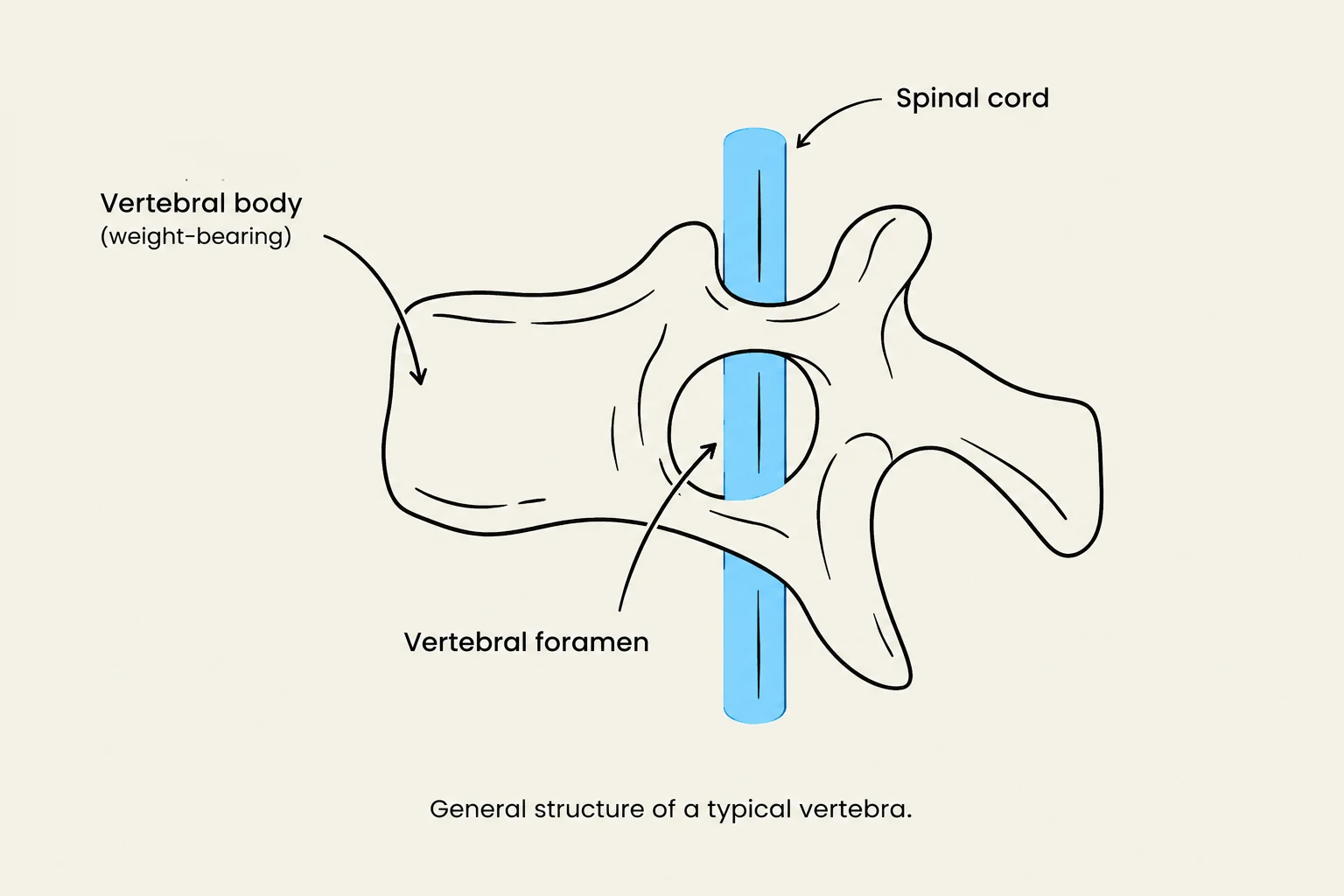
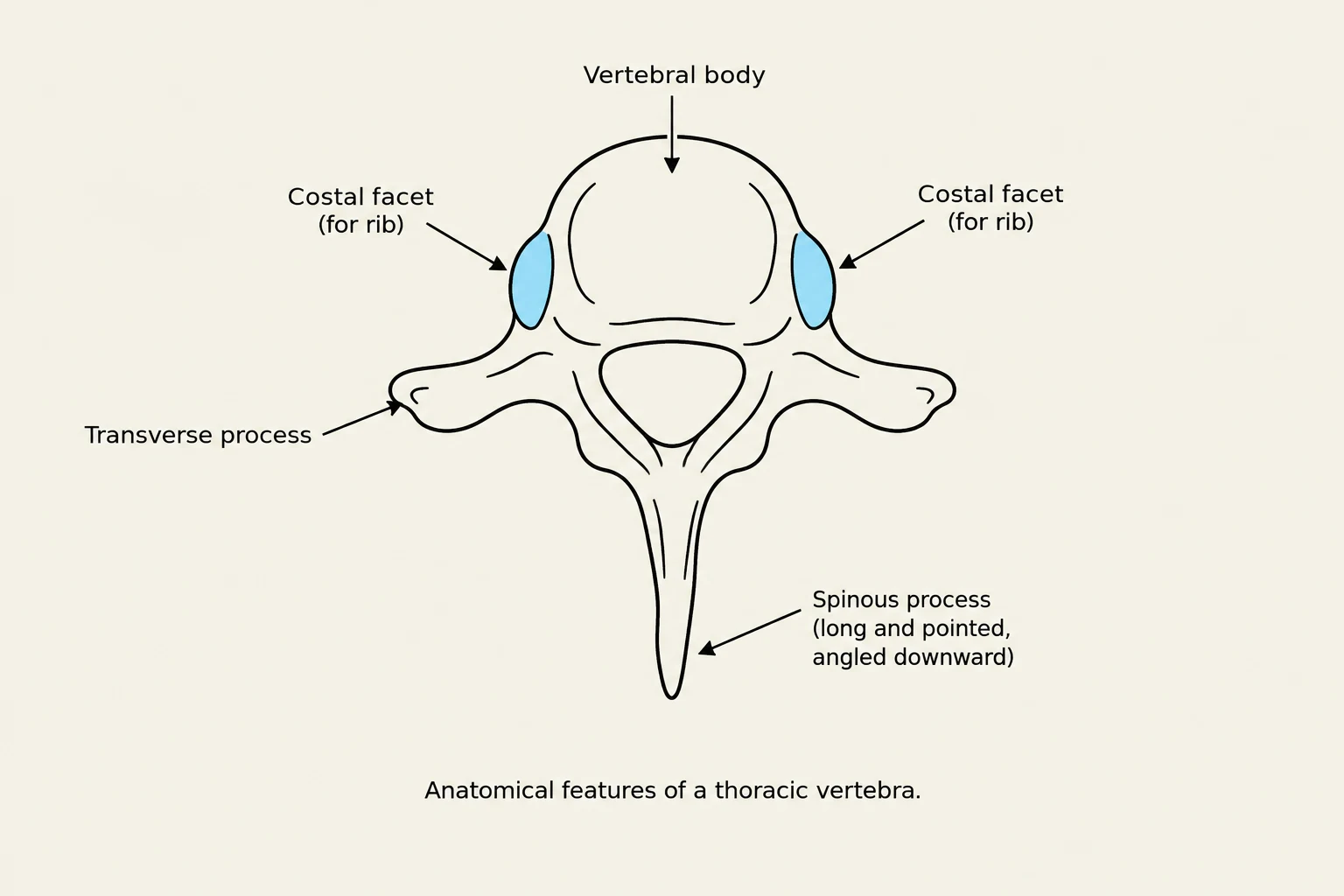
The vertebral column serves as the central supporting axis of the human body. It is a complex chain composed of 33 vertebrae and intervertebral discs that functions to support the skull and trunk, allow for upright posture, protect the spinal cord, and absorb stress from physical activities like walking or lifting. While most vertebrae share common features—such as a weight-bearing body and a vertebral foramen that houses the spinal cord—the column is not uniform. Instead, it is divided into distinct regions, each with specialized anatomical characteristics tailored to its specific physiological role.
Keep reading for free.
Create an account to finish this reading and make it part of your study routine.
Continue reading freeAlready have an account? Log in
Updated