


The muscular system is a complex network of approximately 600 skeletal muscles that facilitate nearly every movement of the human body. Beyond simple locomotion, muscles are essential for maintaining stability, controlling body openings, producing heat (thermogenesis), and even playing a role in glycemic control by absorbing glucose. To study myology—the study of the muscular system—it is helpful to organize muscles by their anatomical region and the specific joints or limbs they act upon.
Muscles of the Abdominal Wall and Back
The muscles of the torso provide structural support for the viscera and facilitate movement of the vertebral column.
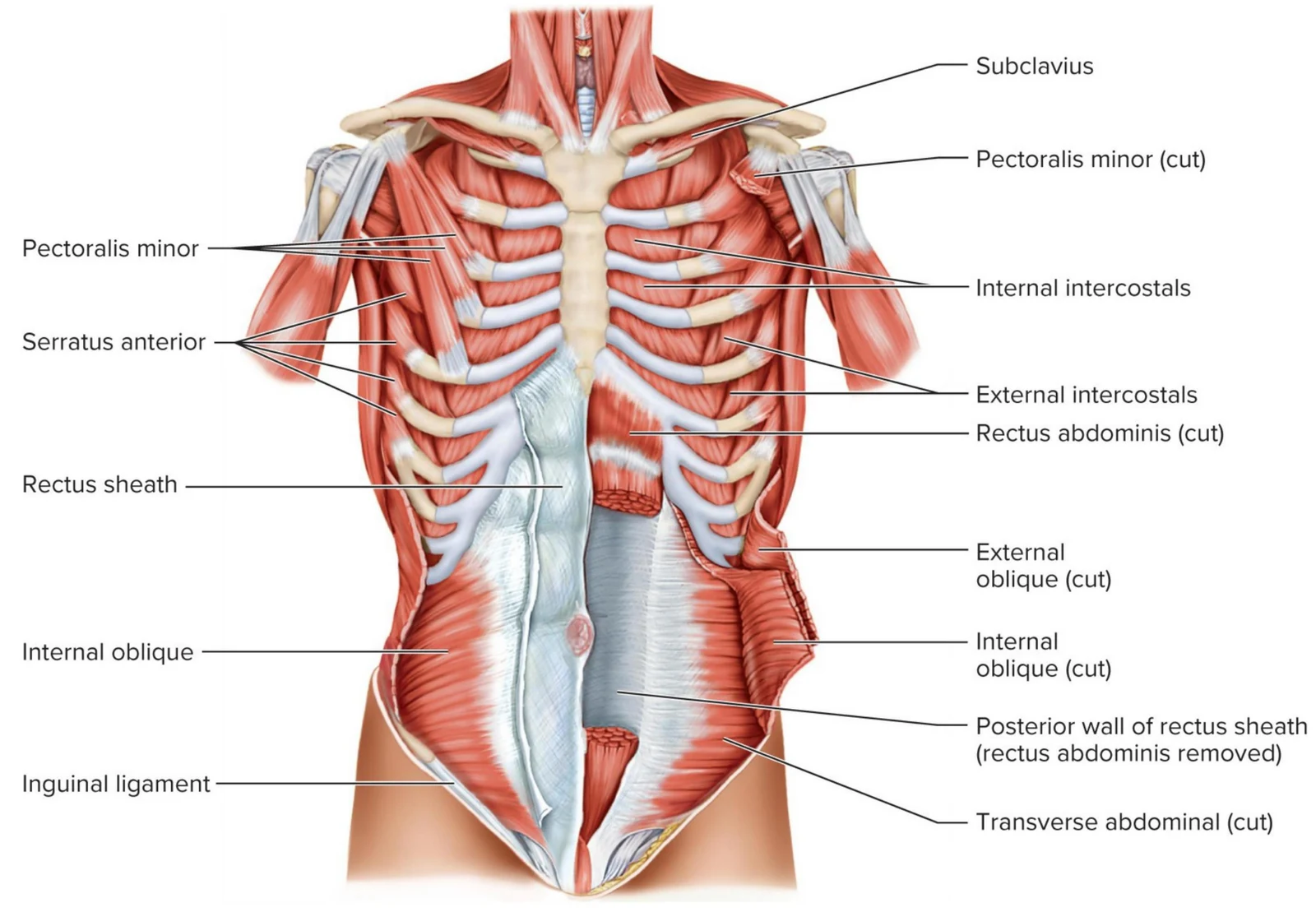
The Abdominal Wall
The abdominal region is enclosed by three distinct layers of muscle that support the internal organs, stabilize the spine, and compress abdominal contents.
- External Oblique: The most superficial layer, with fibers passing downward and anteriorly; it aids in the rotation (twisting) of the waist.
- Internal Oblique: The middle layer, with fibers passing upward and anteriorly.
- Transversus Abdominis: The deepest layer, featuring fibers that pass horizontally.
- Rectus Abdominis: These paired muscles extend vertically from the sternum to the pubis, flexing the waist. They are often identified by their "six-pack" appearance due to tendinous intersections.
The Back
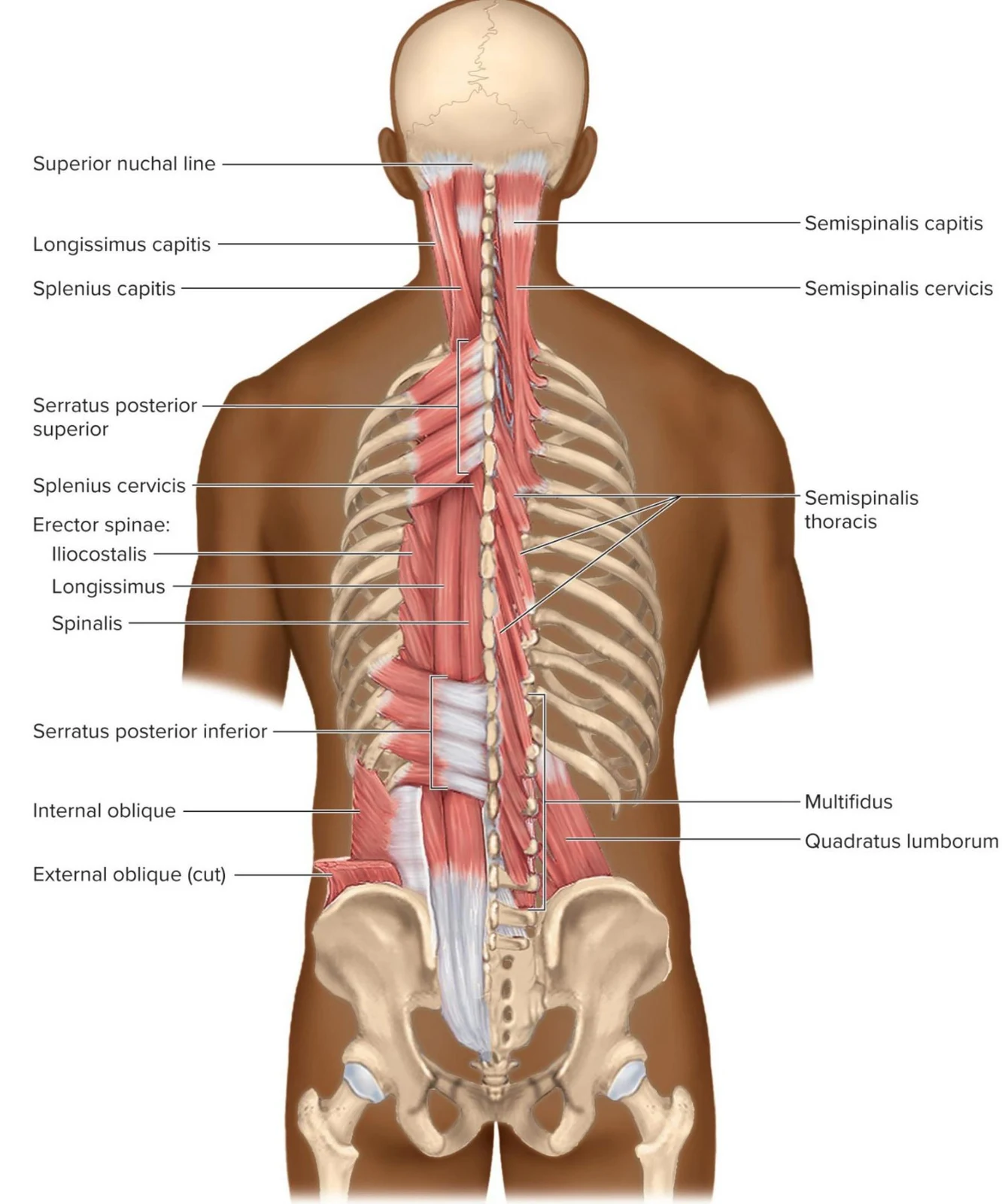
Muscles of the back are generally involved in the extension, rotation, and lateral flexion of the vertebral column.
- Superficial Muscles: The trapezius and latissimus dorsi are prominent muscles that also assist in upper limb movement.
- Erector Spinae Group: These run vertically from the cranium to the sacrum and consist of three columns: the iliocostalis (lateral), longissimus (medial to iliocostalis), and spinalis (most medial).
- Deep Muscles: The multifidus connects adjacent vertebrae to stabilize the spine and maintain posture, while the quadratus lumborum assists in lateral flexion and extension.
Keep reading for free.
Create an account to finish this reading and make it part of your study routine.
Continue reading freeAlready have an account? Log in
Updated