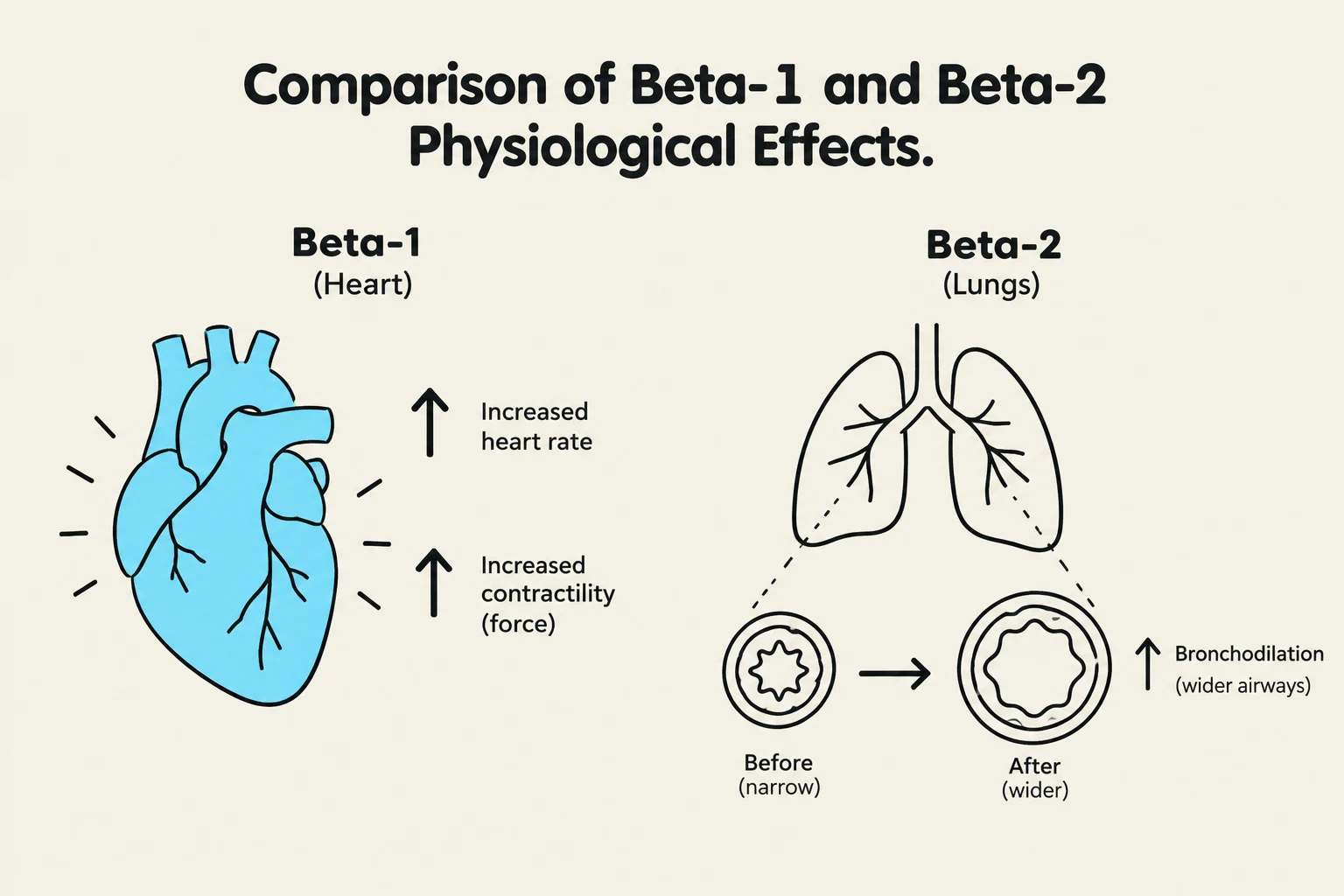
Alpha Adrenergic Receptor Physiological Effects

Explores the divergent roles of alpha-1 and alpha-2 adrenergic receptors in vascular regulation, contrasting their effects with beta-adrenergic receptors.

Save this reading to your study set

Sign up free

Understanding the autonomic nervous system requires a clear distinction between the various adrenergic receptors. While the "fight or flight" response is often generalized as a single surge of adrenaline, the actual physiological outcomes—such as whether a blood vessel narrows or widens—depend entirely on which specific receptor subtype is being stimulated. This article explores the divergent roles of alpha-1 and alpha-2 adrenergic receptors in vascular regulation and provides a comparative overview of how they differ from beta-adrenergic receptors.

The Alpha-1 Receptor: Driving Vasoconstriction
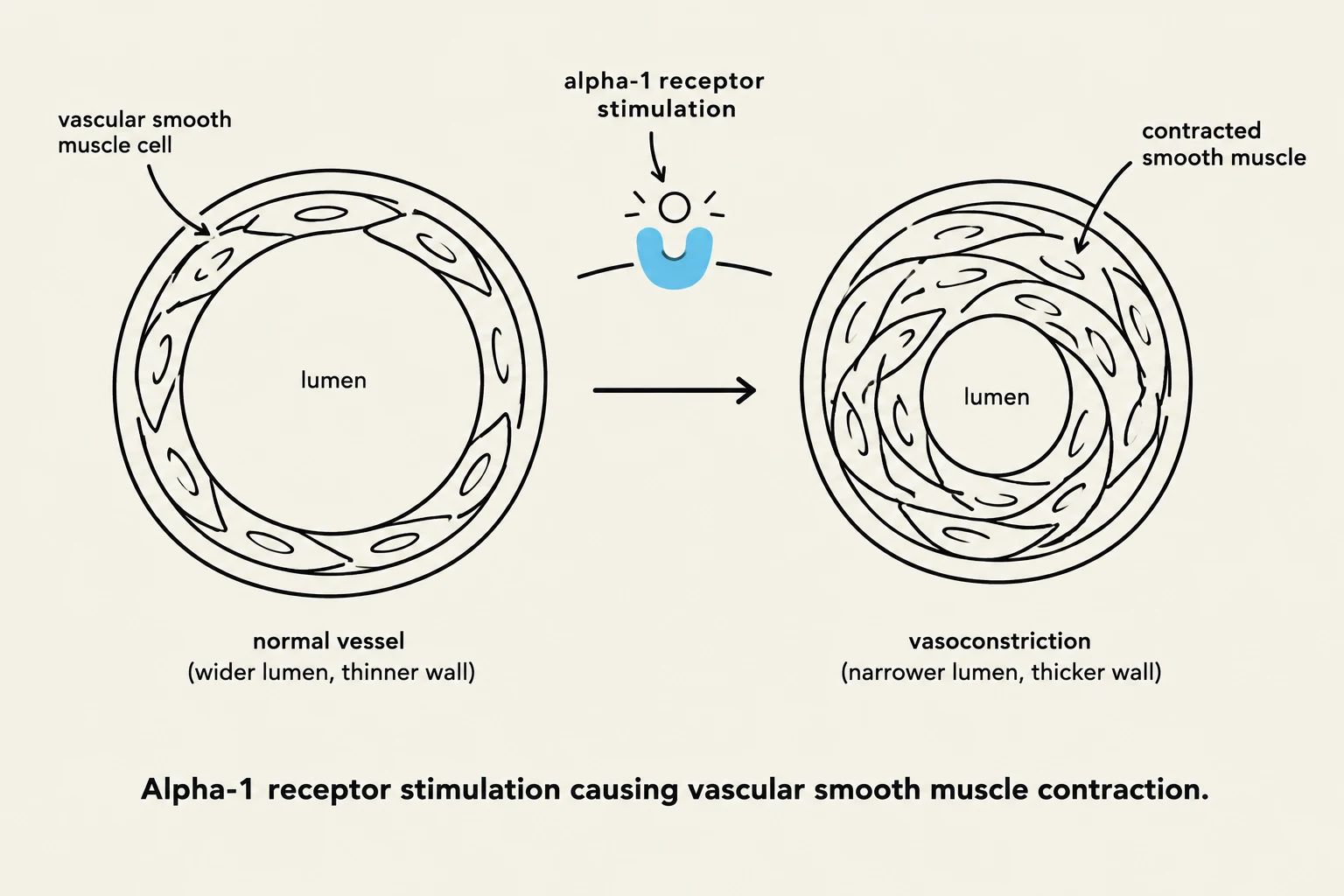
Alpha-1 receptor stimulation causes vascular smooth muscle contraction, leading to vasoconstriction.
The alpha-1 (α1\alpha_1) adrenergic receptor is primarily associated with excitatory responses in the vascular system. When these receptors are stimulated, they act upon the vascular smooth muscle.

The physiological hallmark of α1\alpha_1 stimulation is vasoconstriction. Vasoconstriction refers to the narrowing of the blood vessel lumen caused by the contraction of the smooth muscle cells within the vessel walls. This process increases peripheral resistance, which in turn leads to an increase in systemic blood pressure.

Clinical Note: Because α1\alpha_1 receptors mediate vasoconstriction, drugs that act as alpha-1 agonists are often used to treat hypotension (low blood pressure) by tightening the vascular smooth muscle to increase pressure.

The Alpha-2 Receptor: Mediating Vasodilation
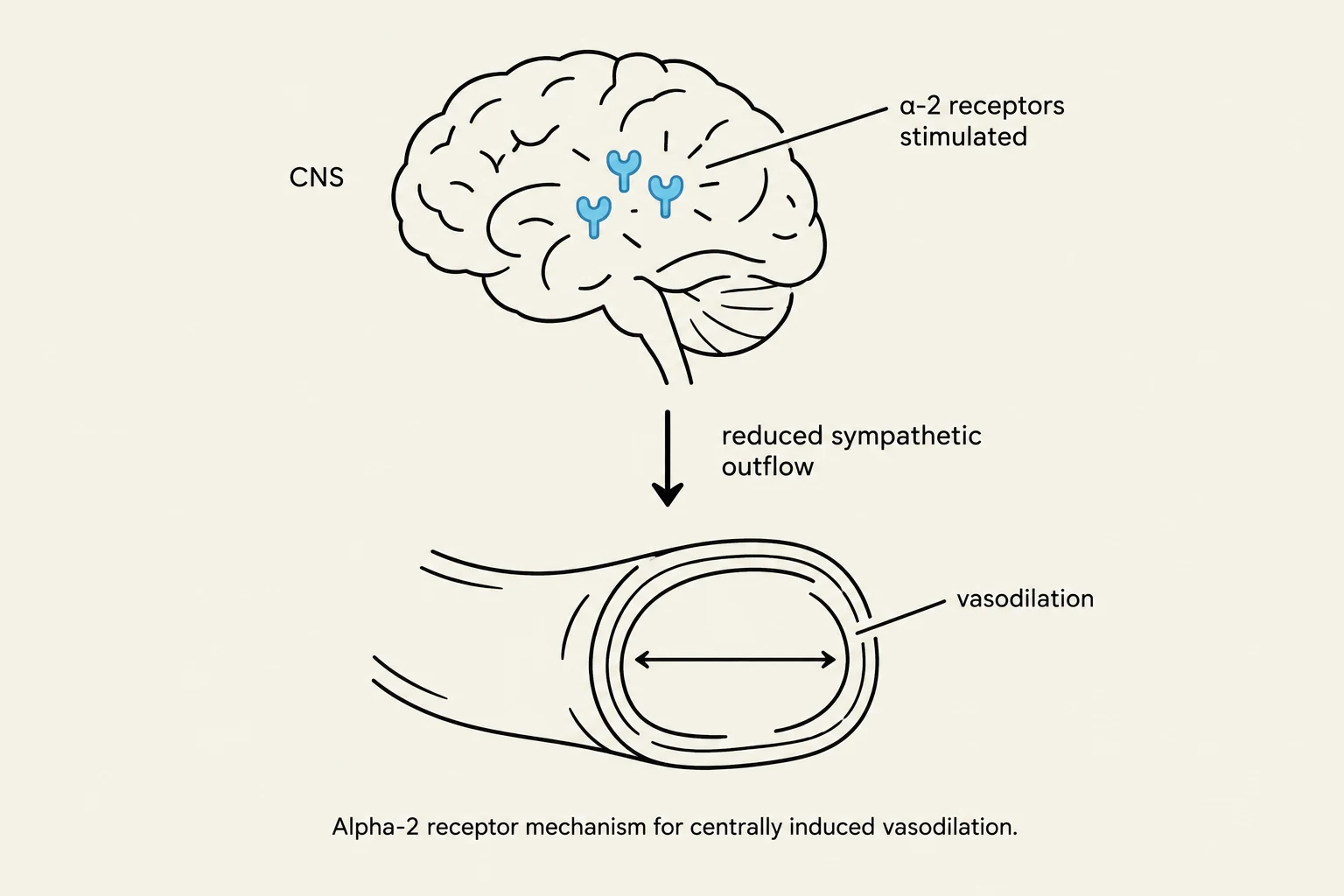
Diagram illustrating the alpha-2 receptor mechanism for centrally induced vasodilation, showing stimulation of alpha-2 receptors in the CNS leading to reduced sympathetic outflow and subsequent vasodilation.
In contrast to the α1\alpha_1 receptor, the alpha-2 (α2\alpha_2) adrenergic receptor plays a regulatory, often inhibitory, role. While α1\alpha_1 receptors work directly on the vessels to constrict them, α2\alpha_2 receptors are located in both the brain (central nervous system) and the periphery.

Keep reading for free.

Create an account to finish this reading and make it part of your study routine.

Continue reading free

Already have an account? Log in

Updated

Study it your way.

Import this reading into your study set to get started with another study mode.

Make it your own.

Keep this reading in a new study set, or add it to one you already use.