Explores the biochemical pathways of alcohol metabolism, including the roles of ADH and ALDH enzymes, the impact of genetic variations on tolerance, and the resulting metabolic disruptions like altered NADH/NAD+ ratios, leading to liver damage such as steatosis, hepatitis, fibrosis, and cirrhosis.
Alcohol consumption triggers a complex series of biochemical transformations primarily centered in the liver. While moderate metabolism can utilize alcohol-derived products as energy, excessive intake disrupts fundamental metabolic pathways, leading to systemic acidosis, fat accumulation, and progressive organ damage. Understanding this process requires a look at the enzymatic pathways, genetic variations that influence tolerance, and the downstream consequences of a shifted redox state.
The Biochemical Pathway of Ethanol Metabolism
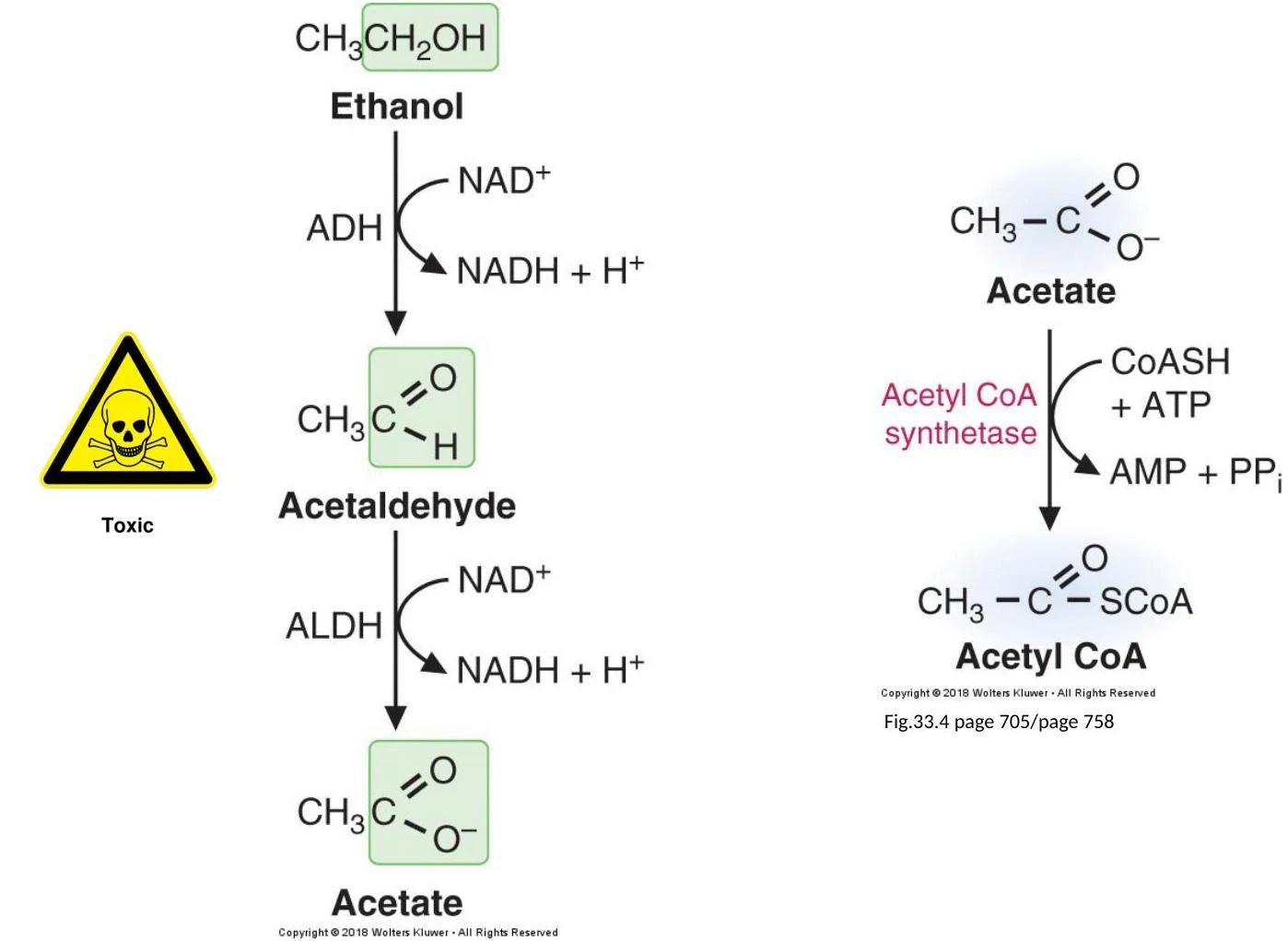
In a "healthy" metabolic state, the body processes ethanol through a multi-step oxidation process. The first step involves the enzyme alcohol dehydrogenase (ADH), which oxidizes ethanol into acetaldehyde. This reaction is significant because it reduces NAD+ to NADH, generating reducing equivalents in the cytoplasm.
This diagram illustrates the metabolic pathways of ethanol oxidation to acetaldehyde and then to acetate, and the conversion of acetate to acetyl CoA.
The second step involves the enzyme aldehyde dehydrogenase (ALDH), which converts the highly reactive and toxic acetaldehyde into acetate. Once converted to acetate, the molecule can be transformed into acetyl CoA, which serves as a versatile fuel source for various tissues, including the heart, muscle, and brain.
Genetic Polymorphisms and Alcohol Tolerance
Not all individuals metabolize alcohol at the same rate. Genetic variations in the enzymes responsible for these steps play a crucial role in determining alcohol tolerance and the risk of dependence.
ADH1 Gene Variants
Polymorphisms in the ADH1 gene can significantly alter the catalytic activity of alcohol dehydrogenase. For example, the ADH1B*2 and ADH1B*3 alleles result in increased enzymatic activity compared to the wild type. This means these individuals convert ethanol to acetaldehyde much faster, often leading to a rapid rise in acetaldehyde levels.
ALDH2 and the "Asian Flush"
A critical factor in alcohol metabolism is the ALDH2 enzyme. A common variant, ALDH2*2, has a significantly higher Km (46μM compared to the normal 0.2μM), meaning it has a much lower affinity for acetaldehyde. Consequently, acetaldehyde is not detoxified efficiently, leading to an accumulation of the toxin. This variant is highly prevalent in certain populations, such as the Japanese, and acts as a protective factor against alcoholism because the resulting physiological discomfort (headache, nausea) discourages heavy drinking.
Exam Tip: Remember that a higher Km indicates lower enzyme affinity. In the case of ALDH2∗2, the high Km leads to slow detoxification and higher acetaldehyde levels.
Metabolic Disruption: The NADH/NAD+ Ratio
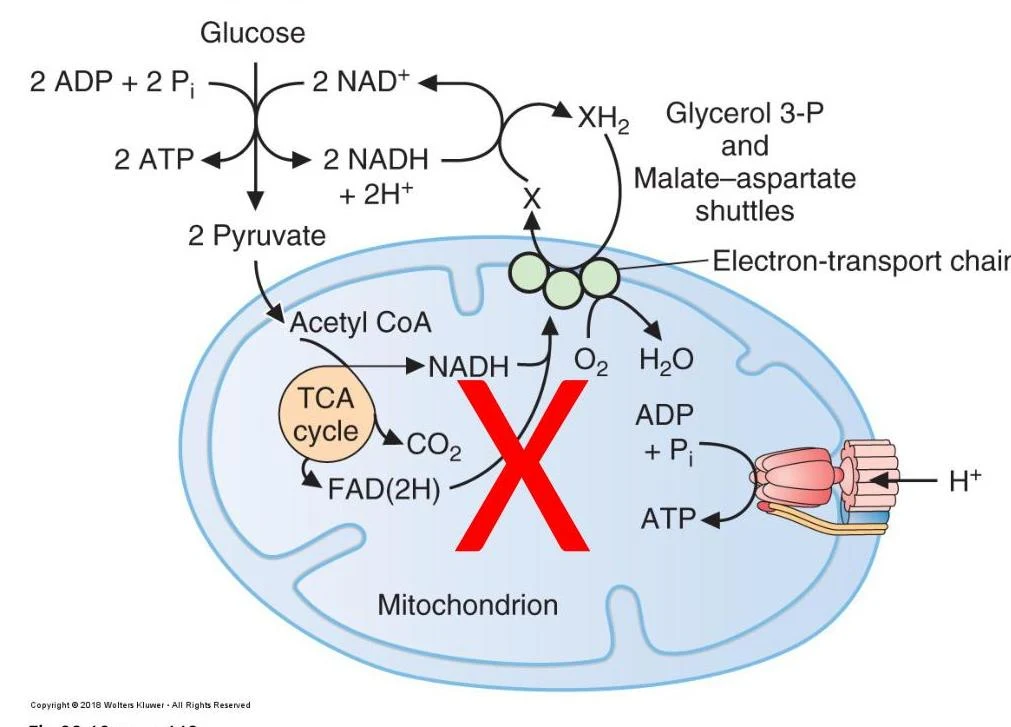
The most profound consequence of alcohol metabolism is the generation of massive amounts of NADH in the cytoplasm. This creates an abnormally high NADH/NAD+ ratio, which fundamentally shifts the cell's redox state and inhibits several key metabolic processes.
TCA Cycle Inhibition
The high concentration of NADH acts as a signal of "energy surfeit," which inhibits key regulatory enzymes in the TCA cycle. When the TCA cycle is blocked, the cell cannot efficiently oxidize acetyl CoA for energy through aerobic pathways.
Shift to Lactate and Fat Production
To deal with the excess pyruvate and the need to regenerate NAD+ to keep glycolysis running, the cell shifts its metabolic strategy:
Lactate Production: Pyruvate is diverted away from the mitochondria and converted into lactate via the enzyme lactate dehydrogenase. This can lead to lactic acidosis.
Lipogenesis: The excess reducing equivalents (NADH) and the surplus of acetyl CoA promote the synthesis of fatty acids, leading to the accumulation of fat within the liver.
This diagram illustrates the process of cellular respiration within a mitochondrion, showing the breakdown of glucose through glycolysis, the TCA cycle, and the electron transport chain to produce ATP.
Progression of Liver Damage
The inability to manage these metabolic shifts leads to a predictable progression of liver disease.
Steatosis (Fatty Liver)
The first stage is steatosis, or fatty liver. This occurs because high NADH levels drive fat synthesis, while simultaneously, acetaldehyde interferes with the microsomal triglyceride transfer protein (MTP). MTP is essential for loading lipids onto VLDL (Very Low-Density Lipoprotein) for export from the liver; when MTP is inhibited, fats cannot leave the liver and instead accumulate in the hepatocytes.
Hepatitis, Fibrosis, and Cirrhosis
As alcohol consumption continues, the liver undergoes chronic inflammation known as alcoholic hepatitis. Persistent damage triggers a wound-healing response that results in liver fibrosis (scarring). Ultimately, this can progress to cirrhosis, where the liver architecture is irreversibly destroyed.
Acute Complications and Systemic Effects
Beyond chronic liver disease, acute alcohol abuse (binge drinking) can cause immediate, life-threatening metabolic crises.
Acidosis: The accumulation of lactate can lead to lactic acidosis. Furthermore, if drinking occurs on an empty stomach, the inhibition of gluconeogenesis (due to high NADH) can lead to hypoglycemia and ketoacidosis.
Brain Damage: Severe nutritional deficiencies, such as Vitamin B1 (thiamine) deficiency, can impair the pyruvate dehydrogenase complex, leading to conditions like Korsakoff syndrome.
Chronic Induction (MEOS): In chronic drinkers, the body induces the Microsomal Ethanol Oxidizing System (MEOS), specifically the enzyme CYP2E1. While this may slightly increase alcohol tolerance, it increases damage by generating more acetaldehyde and reactive oxygen species (ROS). This induction also creates dangerous interactions with medications like paracetamol (acetaminophen), which CYP2E1 converts into the toxic metabolite NAPQI, potentially causing acute liver necrosis.
Coagulation Issues: Chronic alcohol use can impair the liver's ability to produce coagulation factors (which require Vitamin K for γ-carboxylation), leading to increased bleeding risks.
Keep reading for free.
Create an account to finish this reading and make it part of your study routine.