


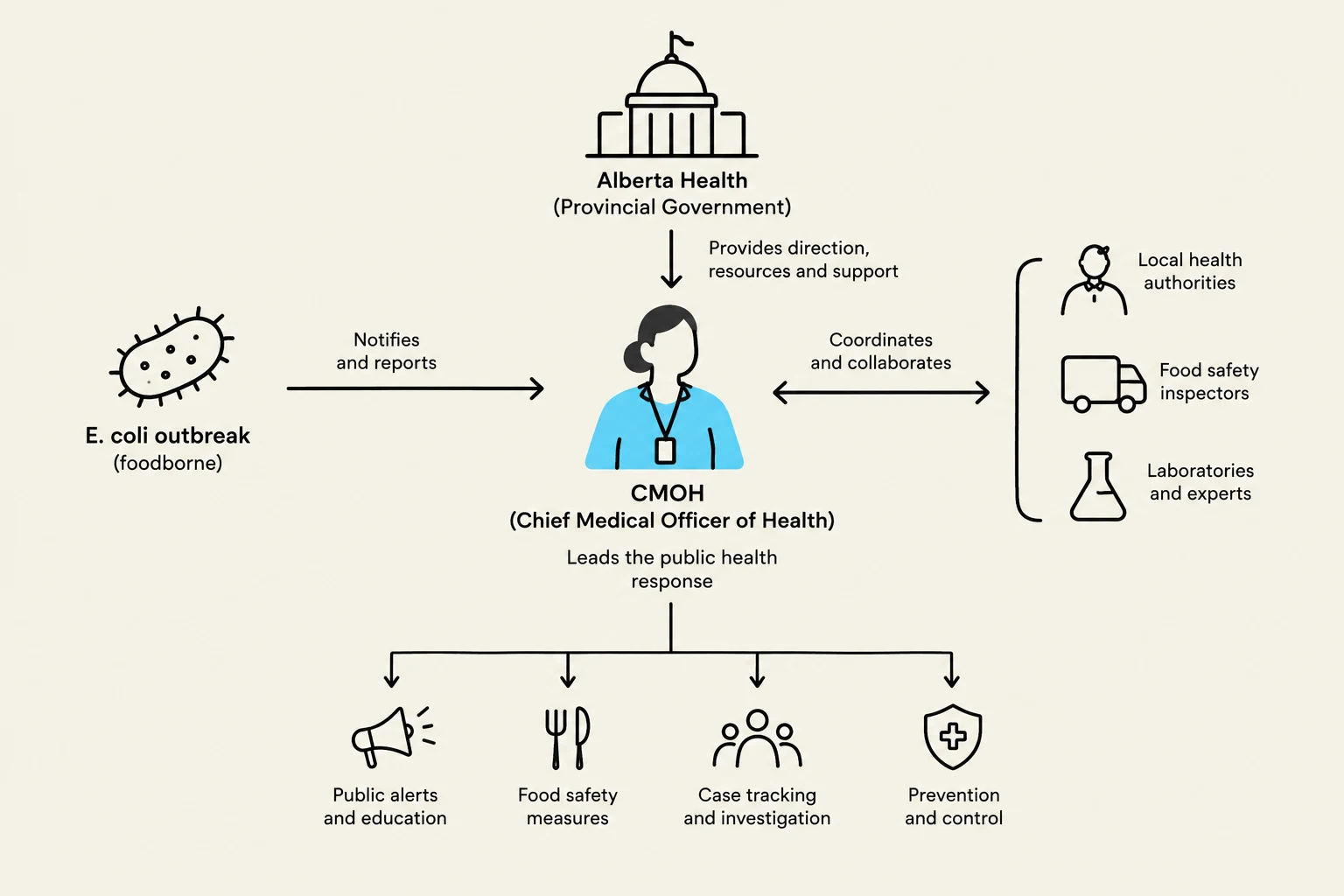
The landscape of healthcare in Alberta has undergone a fundamental transformation. Moving away from the centralized model that defined the previous decade, the province has transitioned toward a decentralized, sector-based structure. As of May 2026, the single authority of Alberta Health Services (AHS) has been repurposed, and the provincial government has split its health oversight into four distinct ministries. This article explores this new organizational framework and uses the 2023 Calgary daycare E. coli outbreak as a case study to examine how these structures interact during a public health crisis.
The Four Pillars of Alberta Healthcare
Under the current provincial model, healthcare is no longer managed as a single monolithic entity. Instead, it is organized into four specialized ministries, each overseeing specific provincial health agencies and programs.
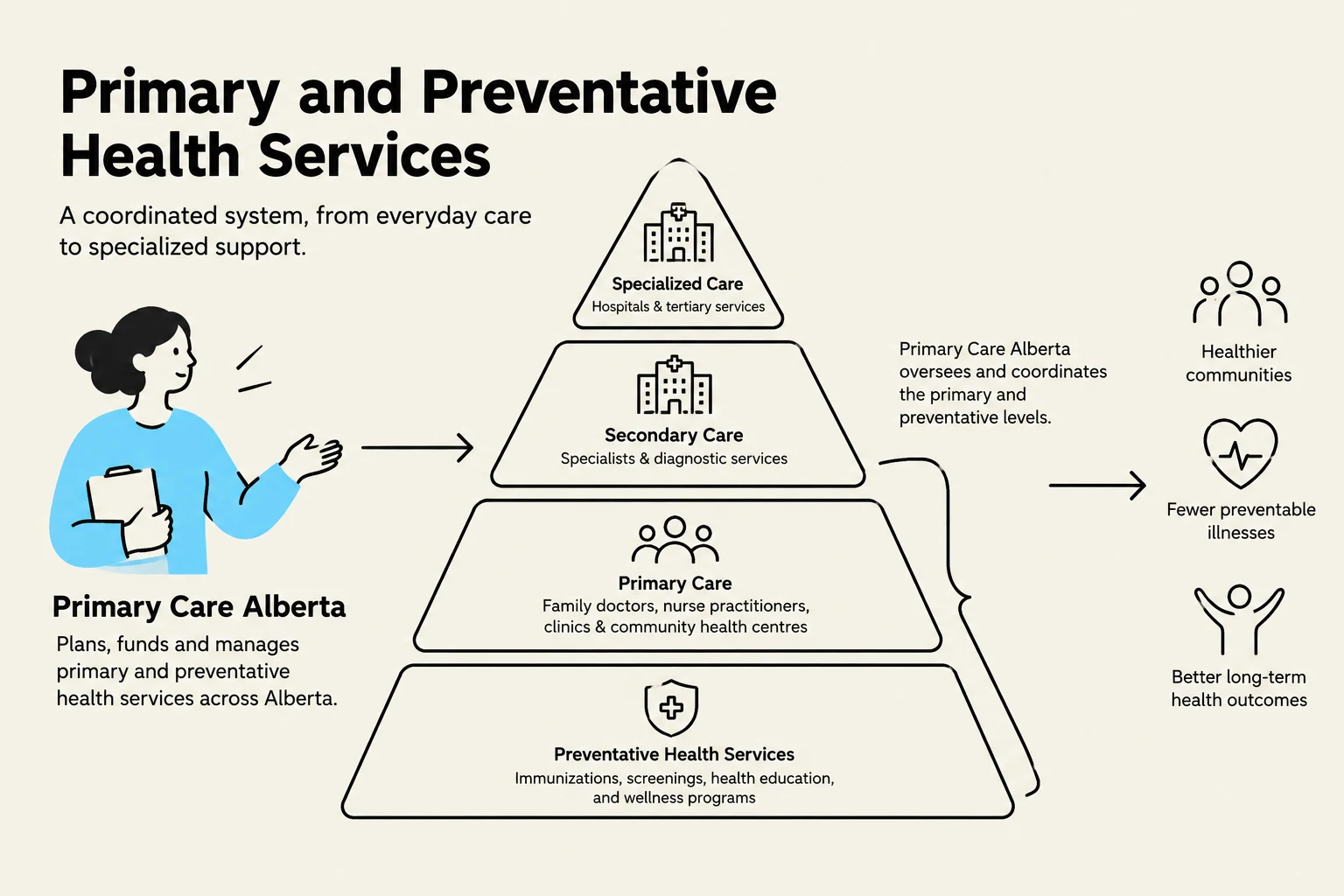
1. Ministry of Primary and Preventative Health Services
This ministry focuses on the "upstream" aspects of health—preventing illness before it requires hospital intervention. It is managed by Primary Care Alberta, which oversees family physicians, nurse practitioners, and the Health Link 811 service. Crucially, this sector also manages public health and environmental public health initiatives, including screening programs and disease surveillance.
2. Ministry of Hospital and Surgical Health Services
This sector manages "downstream" care—treating patients who are already ill or injured. It is overseen by Acute Care Alberta. Within this pillar, Alberta Health Services (AHS) has been refocused to act specifically as a hospital operator. Other specialized provincial health corporations under this ministry include:
Keep reading for free.
Create an account to finish this reading and make it part of your study routine.
Continue reading freeAlready have an account? Log in
Updated