


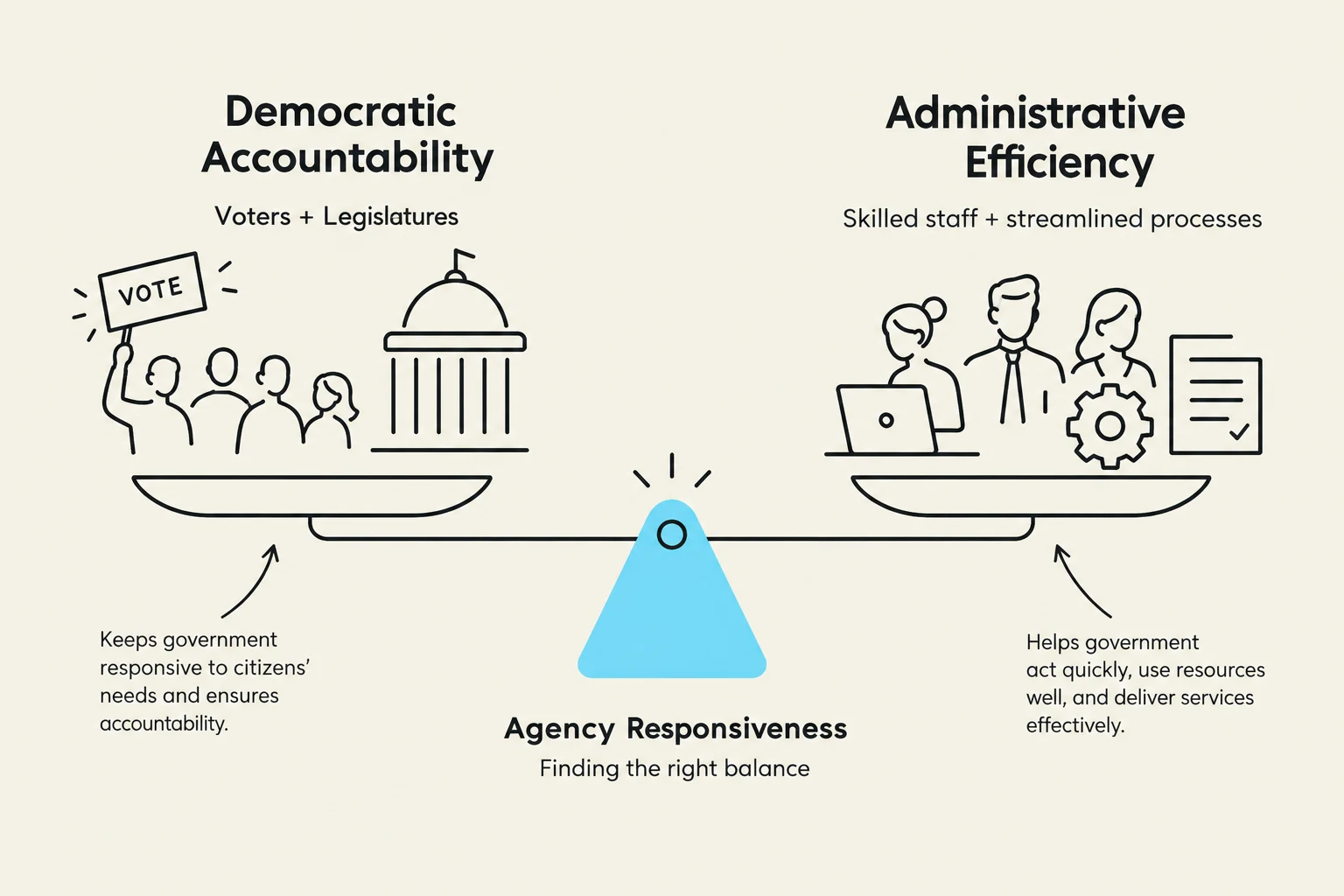
In the study of public administration and political science, one of the most enduring challenges is the "Agency Responsiveness" dilemma. This concept explores the fundamental tension between two competing democratic ideals: the need for government agencies to be responsive to the will of the people (democracy) and the need for those same agencies to act with independence, expertise, and speed (efficiency).
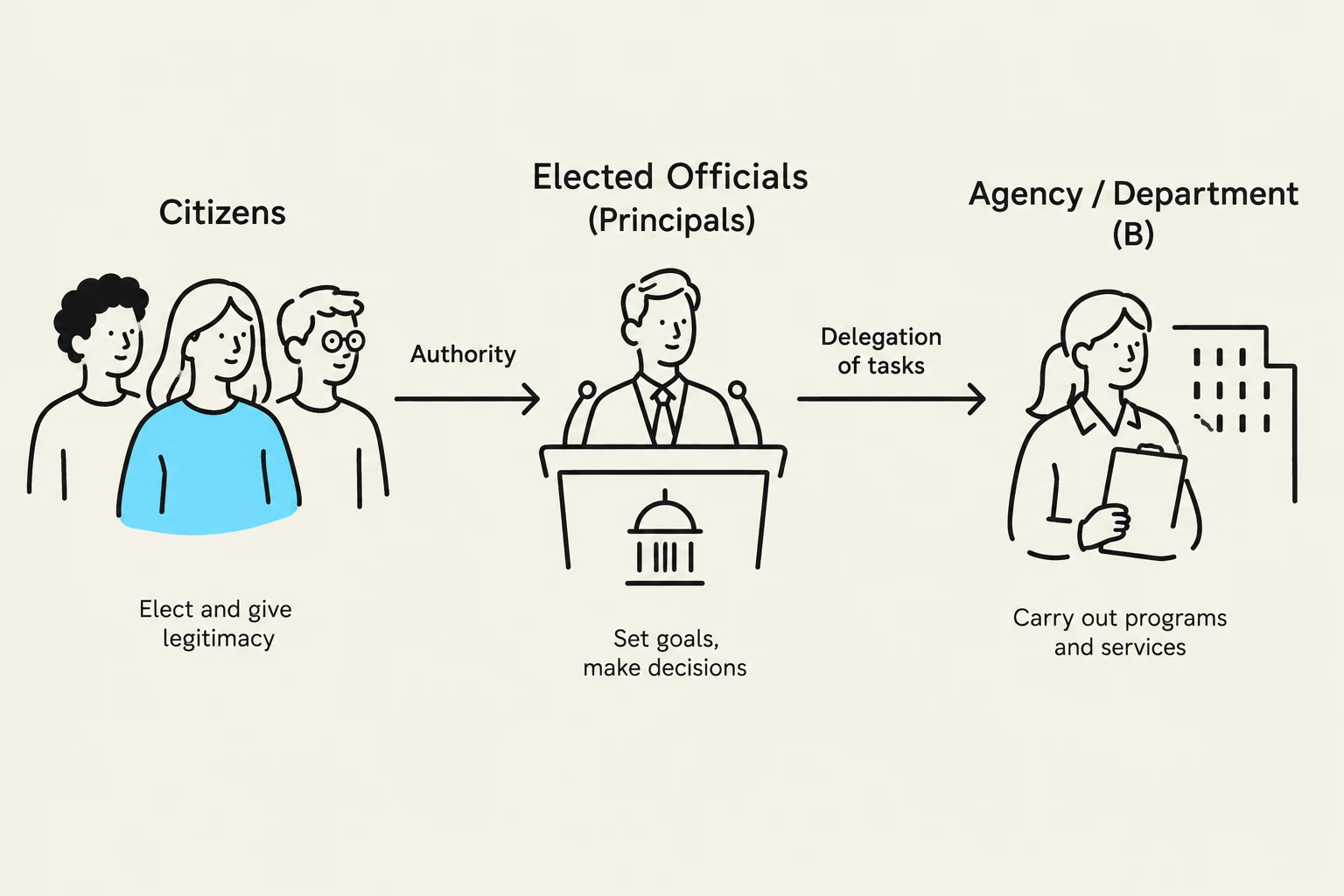
When we delegate power to a bureaucracy, we are essentially creating a relationship between a "Principal" (the people or their elected representatives) and an "Agent" (the agency tasked with carrying out the law). This relationship is rarely seamless, as the goals of the person giving the orders often clash with the practical realities faced by the person executing them.
The Principal-Agent Problem in Bureaucracy
To understand agency responsiveness, we must first understand the Principal-Agent Problem. In a democratic system, the citizens (the Principals) elect officials to represent their interests. These officials, in turn, delegate specific tasks to administrative agencies (the Agents) to manage complex sectors like the environment, public health, or transportation.
The problem arises because the Agent and the Principal often have different preferences, information levels, and incentives. This leads to two primary issues:
- Information Asymmetry: The agency knows much more about the technical details of its work than the elected officials or the public do.
- Goal Divergence: The agency might prioritize its own survival, budget expansion, or professional standards over the specific policy goals set by the legislature.

Keep reading for free.
Create an account to finish this reading and make it part of your study routine.
Continue reading freeAlready have an account? Log in
Updated