Examines the normal physiological changes in the musculoskeletal, cardiovascular, and respiratory systems that occur with aging, distinguishing them from pathological conditions. Covers sarcopenia, bone density loss, kyphosis, decreased cardiac output, arterial stiffening, and reduced respiratory efficiency.
As the human body ages, multiple physiological systems undergo structural and functional transformations that impact overall efficiency and homeostasis. It is a fundamental principle of gerontological nursing that not all physiological changes associated with aging are pathological; many are normal transitions that occur as part of the aging process. Understanding these changes is essential for distinguishing between normal aging and the onset of disease, allowing healthcare providers to better support the functional ability and quality of life of older adults.
The Musculoskeletal System: Structure and Composition
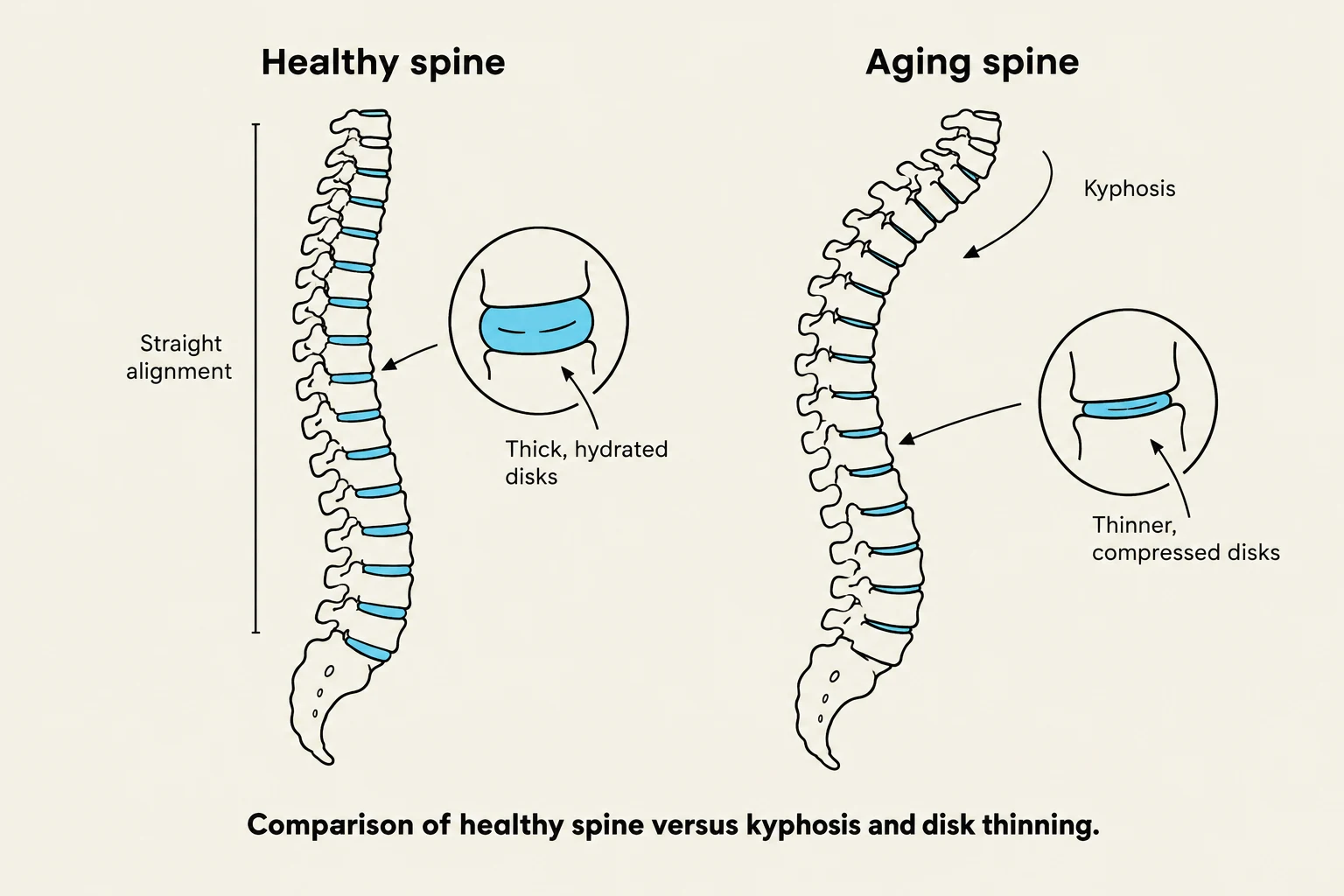
Comparison of a healthy spine with straight alignment and thick, hydrated disks versus an aging spine exhibiting kyphosis and thinner, compressed disks.
The musculoskeletal system undergoes significant changes that alter body shape, posture, and physical strength. One of the most prominent changes is the decline in lean body mass and the loss of body water, which collectively alter an individual's body weight and shape.
Sarcopenia and Bone Density
A primary concern in musculoskeletal aging is sarcopenia, which refers to the age-related decline in muscle mass. This loss of muscle, combined with a reduction in bone mineral density (BMD), can significantly impact an older person's ability to perform activities of daily living (ADLs) and increases the risk of injury.
Postural Changes
Structural changes in the spine also play a major role in the physical appearance of older adults. The vertebral disks tend to become thinner over time, which can cause a shortening of the trunk. This structural shift often results in a stooped appearance, a condition known as kyphosis.
Clinical Note: When assessing an older adult, observe their posture and gait. Changes like kyphosis or a sudden loss of muscle strength may indicate a need for physical therapy or nutritional intervention to manage bone density and muscle mass.
The Cardiovascular System: Efficiency and Responsiveness
The cardiovascular system experiences declines in both structural integrity and functional responsiveness. These changes can affect how the body manages blood pressure and delivers oxygen to vital organs.
Cardiac Function
Aging affects the heart's ability to meet the body's demands, especially during physical activity. Key changes include:
Decreased maximum coronary artery blood flow.
Reduced stroke volume.
Decreased overall cardiac output.
Furthermore, the heart's ability to regulate its rhythm changes; it typically takes longer for the heart to accelerate during exertion and longer to return to a resting state.
Vascular Changes and Resistance
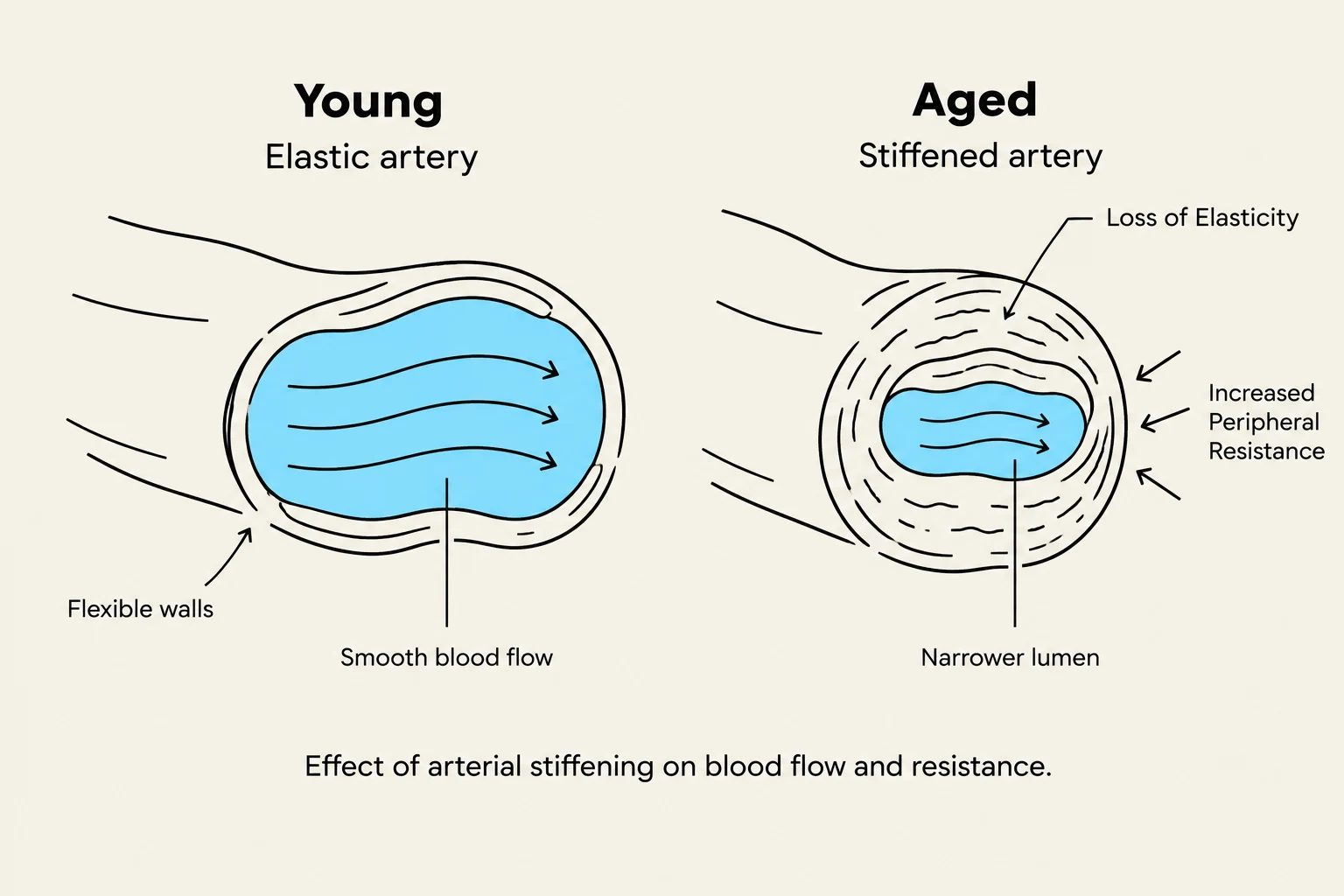
This diagram illustrates the difference between a young, elastic artery and an aged, stiffened artery, showing how arterial stiffening leads to a narrower lumen, loss of elasticity, and increased peripheral resistance, affecting blood flow.
One of the most significant impacts on the cardiovascular system is the stiffening of the myocardium (heart muscle) and the blood vessels. As the arteries and arterioles lose their elasticity and recoil, the body faces several challenges:
Increased Peripheral Resistance: Stiffer vessels make it harder for blood to flow, increasing resistance throughout the system.
Blood Pressure Regulation: Because the vessels are less elastic, the body has a harder time adjusting blood pressure quickly. This increases the risk of dizziness or fainting (syncope) when an older person stands up suddenly.
Reduced Perfusion: There is often decreased blood flow (perfusion) to vital organs, such as the liver and kidneys.
Venous Function: Alterations in venous function can lead to an increased risk of venous thrombosis (blood clots).
The Respiratory System: Gas Exchange Efficiency
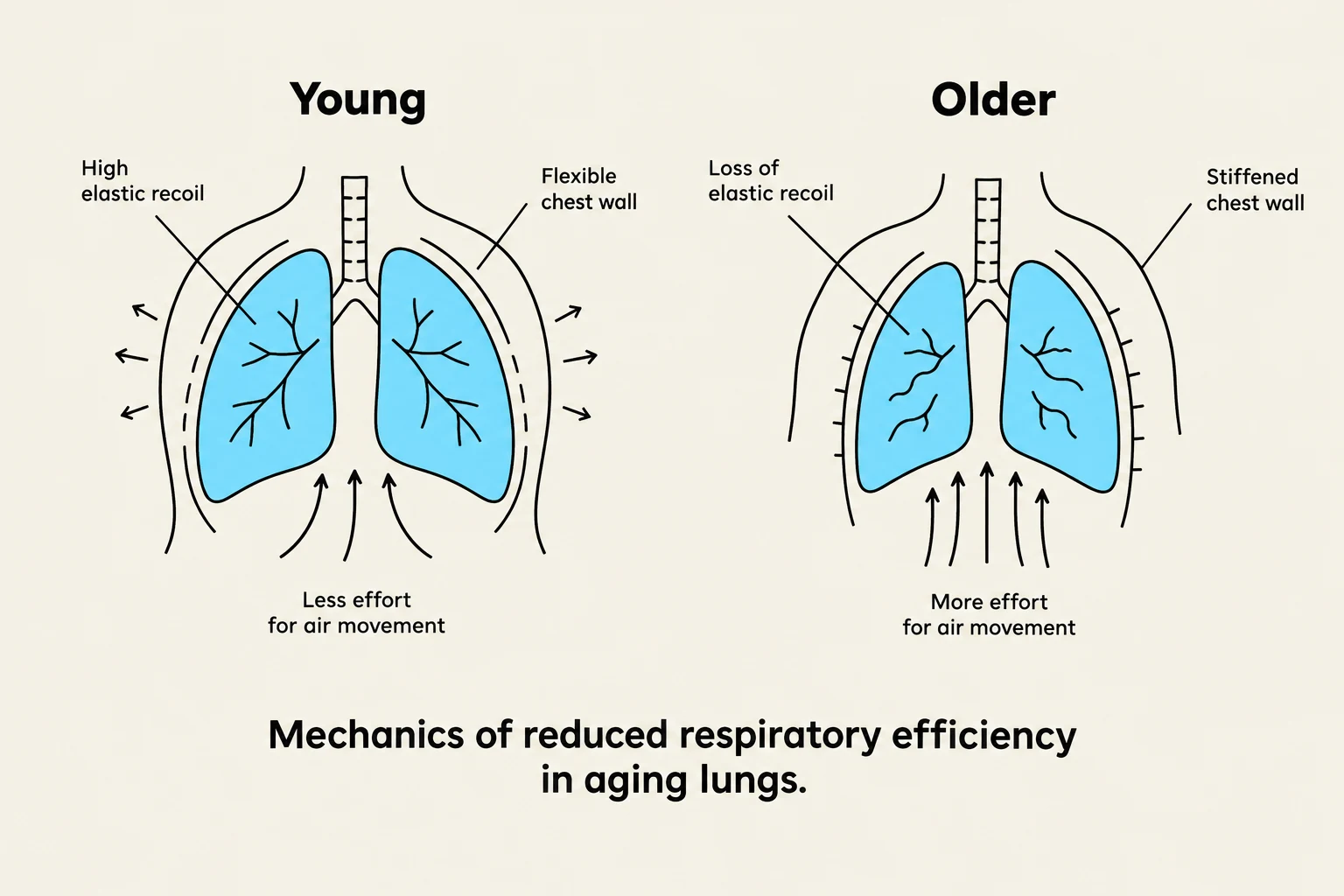
Diagram illustrating the mechanics of reduced respiratory efficiency in aging lungs, comparing a young lung with high elastic recoil and a flexible chest wall to an older lung with loss of elastic recoil and a stiffened chest wall.
While the cardiovascular system moves the blood, the respiratory system is responsible for the vital task of transferring oxygen into the blood and releasing carbon dioxide. In older adults, the primary change in the respiratory system is a decrease in overall efficiency.
Several physiological shifts contribute to this inefficiency:
Loss of Elastic Recoil: The lung tissue loses its ability to spring back, which is necessary for effective breathing.
Chest Wall Stiffening: The muscles and bones of the chest wall become stiffer, which increases the physical work required to breathe.
Airflow Resistance: There is an increased resistance to the movement of air through the respiratory passages.
Lung Volume Changes: Changes in lung volume and the mechanics of breathing can lead to less efficient gas exchange.
Exam Tip: If asked to identify the "biggest change" in the respiratory system during aging, remember that it is not necessarily a change in volume alone, but a decrease in the efficiency of gas exchange.
Summary of Systemic Impact
The aging process is a complex interplay of these various systemic changes. From the loss of muscle and bone density in the musculoskeletal system to the decreased cardiac output and increased peripheral resistance in the cardiovascular system, and finally the respiratory inefficiencies, these transformations define the physiological landscape of older adulthood. For healthcare professionals, recognizing these as "normal" age-related changes—rather than immediate signs of pathology—is key to providing effective, person-centered care.
Keep reading for free.
Create an account to finish this reading and make it part of your study routine.