This article explores the fundamental physiological determinants of aerobic performance and the principles of program design required to elicit maximal adaptations. It covers key concepts such as VO2max, lactate threshold, exercise economy, and the manipulation of training variables like frequency, intensity, and durat
Aerobic endurance is a cornerstone of athletic performance, encompassing the ability of an individual to sustain prolonged physical activity through efficient energy production and utilization. To optimize this capacity, coaches must design programs that target specific physiological systems while carefully managing the relationship between training stimulus and recovery. This article explores the fundamental physiological determinants of aerobic performance and the principles of program design required to elicit maximal adaptations.
Physiological Foundations of Aerobic Performance
Aerobic endurance training is not merely about "running longer"; it is a systemic endeavor designed to improve the efficiency of several key physiological components:
Respiratory System: Enhancing the ability to move air in and out of the lungs and facilitate gas exchange.
Cardiovascular System: Improving the heart's ability to pump oxygenated blood and the vascular system's ability to deliver it to working muscles.
Musculoskeletal System: Developing the muscular endurance and structural integrity required to withstand repetitive loading.
Nervous System: Optimizing motor unit recruitment and neuromuscular coordination to maintain efficient movement patterns under fatigue.
Maximal Aerobic Capacity (VO2max)
VO2max represents the ceiling of an athlete's aerobic potential. It is the maximum amount of oxygen an individual can utilize during intense, maximal exercise. While a high VO2max is a fundamental requirement for success in aerobic events, it is not the sole predictor of performance; an athlete with a lower VO2max may outperform another if they possess superior economy or lactate management.
Lactate Threshold and Steady State
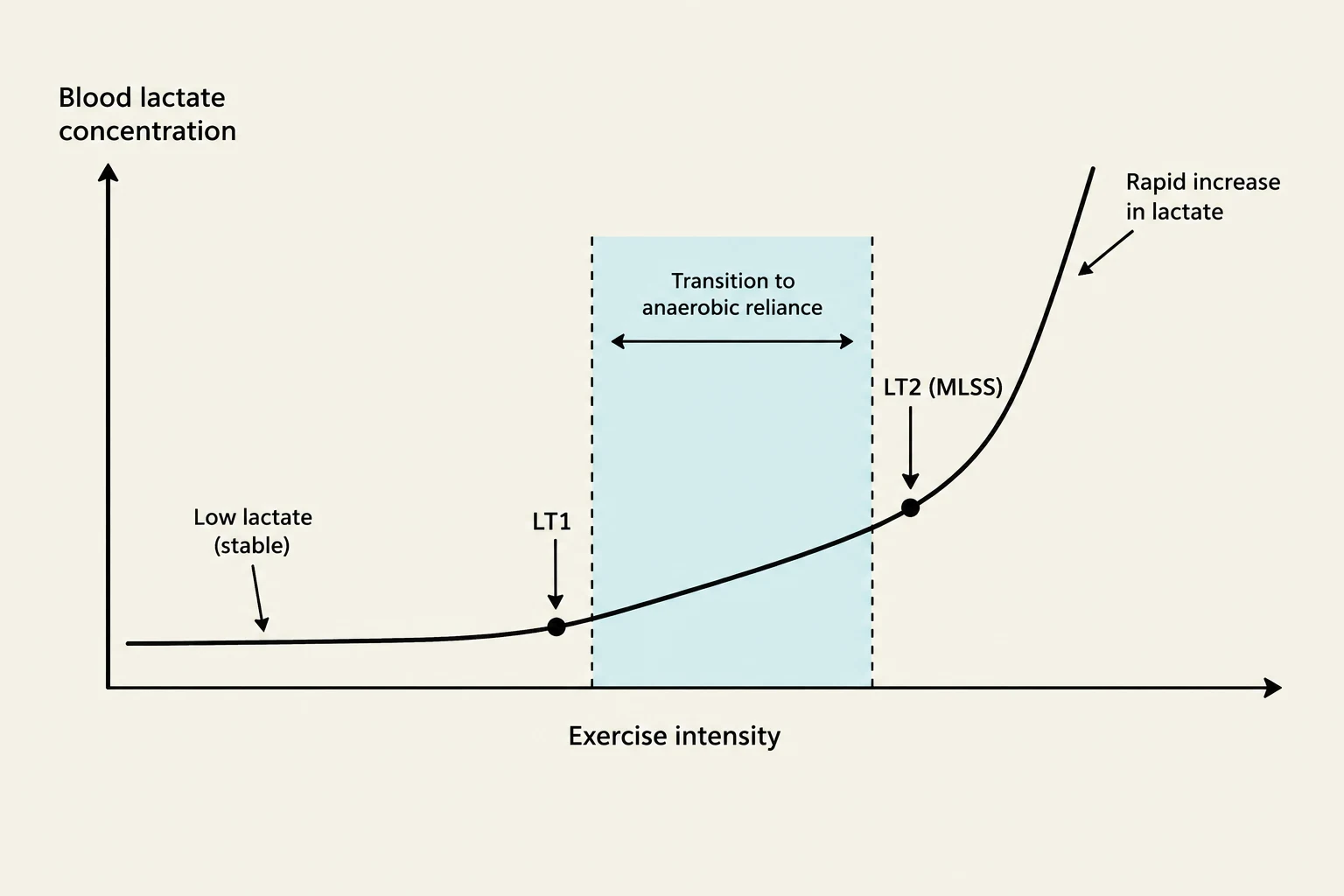
This graph illustrates the relationship between exercise intensity and blood lactate concentration, showing the transition to anaerobic reliance and a rapid increase in lactate at higher intensities.
As exercise intensity increases, the body's reliance on anaerobic pathways grows, leading to the accumulation of metabolic byproducts. The Lactate Threshold (LT) is the critical marker of an athlete's ability to sustain high-intensity work without succumbing to metabolic acidosis—a state where blood $H^+$ concentration increases, leading to rapid fatigue.
Training literature often distinguishes between two levels of threshold:
LT1 (or VT1): The first level of relative intensity where blood lactate begins to rise above resting levels. This intensity is generally unsustainable for long durations.
LT2 (also known as MLSS, CP, or CV): This is the Maximal Lactate Steady State (MLSS), defined as the highest intensity where maximal lactate production is matched by maximal lactate clearance. This is considered a superior indicator of endurance performance, as athletes can often maintain this state for 45 to 60 minutes.
Exercise Economy
Exercise economy refers to the energy cost of activity at a specific velocity. An athlete with high economy consumes less oxygen to maintain a given pace. It can be mathematically expressed as the ratio of work produced to energy used:
Exercise Economy=Energy UsedWork Produced
Improving economy enhances both VO2max and lactate threshold by reducing the metabolic demand required to maintain a specific workload.
Principles of Program Design
Effective program design relies on the application of progressive overload through the manipulation of three primary variables: frequency, intensity, and duration.
The Dose-Response Relationship
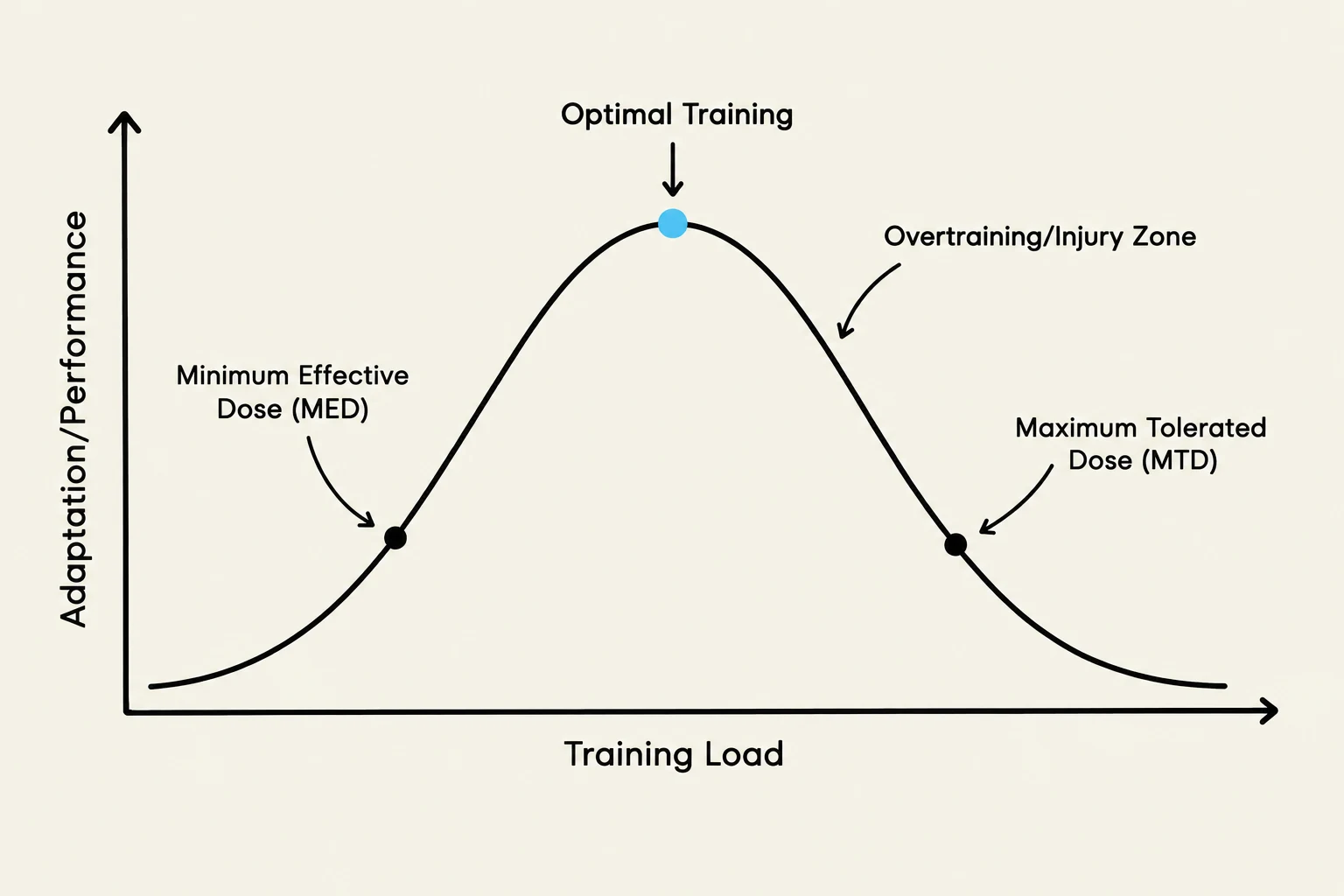
This graph illustrates the relationship between training load and adaptation/performance, showing optimal training, minimum effective dose (MED), maximum tolerated dose (MTD), and the overtraining/injury zone.
Coaches must balance two critical concepts to ensure progress while avoiding injury:
Minimum Effective Dose (MED): The smallest amount of training required to maximize physiological adaptations.
Maximum Tolerated Dose (MTD): The highest workload that provides measurable benefits without causing excessive injury or overtraining.
To avoid overtraining and injury, it is recommended that any single training variable (frequency, intensity, or duration) should not increase by more than 10% per week.
Manipulating Training Variables
Frequency: This refers to the number of training sessions conducted per day or per week. Frequency depends on the athlete's training status, the specific phase of the season, and recovery requirements. Highly trained athletes may require more frequent sessions, but sufficient recovery is essential to allow for physiological remodeling, such as glycogen replenishment and protein synthesis.
Intensity: This is the level of effort exerted during a session. Intensity can be monitored via heart rate (HR), blood lactate levels, or the Rating of Perceived Exertion (RPE). While VO2 monitoring is the most accurate, lactate monitoring is more practical for many coaches.
Duration: The length of the training session is heavily influenced by intensity; generally, the higher the intensity, the shorter the required duration.
Exam Tip: Monitoring Intensity
When designing programs, remember that Heart Rate (HR) is the most common monitoring tool, but it can be influenced by external factors such as heat, humidity, altitude, and even psychological state.
Training Modalities and Special Considerations
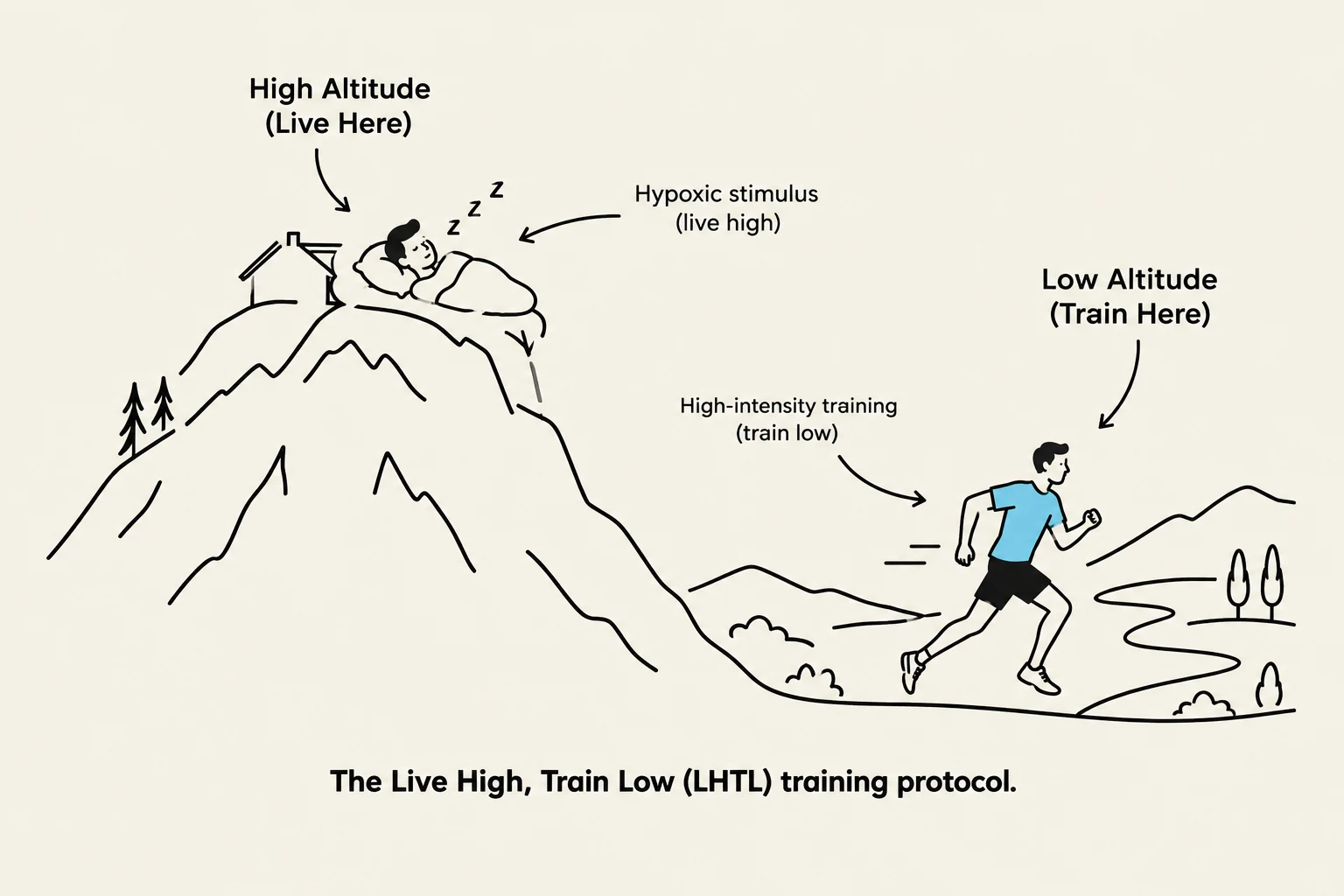
The Live High, Train Low (LHTL) training protocol illustrates the concept of living at high altitude to experience hypoxic stimulus and training at low altitude for high-intensity exercise.
Training Types
Extensive Endurance: Often called "long, slow distance" training, this involves high-volume work at a lower intensity (typically Zone 2). It benefits thermoregulatory function, mitochondrial energy production, and fat oxidation.
Intensive Endurance: This involves higher intensities, often utilizing interval methods to improve performance at or above the lactate threshold. This may include "race pace" intervals or high-intensity intervals (HIIT) that approach VO2max.
Environmental and Special Factors
Program design must account for unique physiological stressors:
Altitude: At higher altitudes, the partial pressure of oxygen decreases, which can reduce aerobic performance. Athletes may use "Live High, Train Low" (LHTL) protocols to gain physiological benefits from hypoxia while maintaining high training intensities at lower altitudes.
Heat Acclimatization: Training in heat increases sweat rates and core temperatures, which can lead to fatigue and decreased blood volume. However, heat acclimation can improve cardiovascular stability and economy.
Cross-Training: This involves using different modes of exercise to maintain aerobic fitness while reducing the specific repetitive loading that leads to injury.
Summary Table: Training Zones and Intensity
Zone
Type
% of FTP/Threshold
RPE
1
Active Recovery
<55%
<3
2
Endurance
56-75%
3-4
3
Tempo
76-90%
5-6
4
Threshold
91-105%
7
5
VO2max
>106%
8-10
(Data adapted from)
Keep reading for free.
Create an account to finish this reading and make it part of your study routine.