


The management of endometrial cancer has undergone a significant paradigm shift, moving from a "one-size-fits-all" chemotherapy approach to highly individualized strategies. Modern treatment protocols are increasingly dictated by the molecular landscape of the tumor, including its mismatch repair status and specific genetic expressions. For patients facing advanced or recurrent disease, the goal is to balance systemic control with the minimization of toxicity through targeted and immunotherapeutic interventions.
Understanding Advanced and Recurrent Disease
In clinical practice, it is essential to distinguish between the stages of progression to determine the appropriate therapeutic intensity.
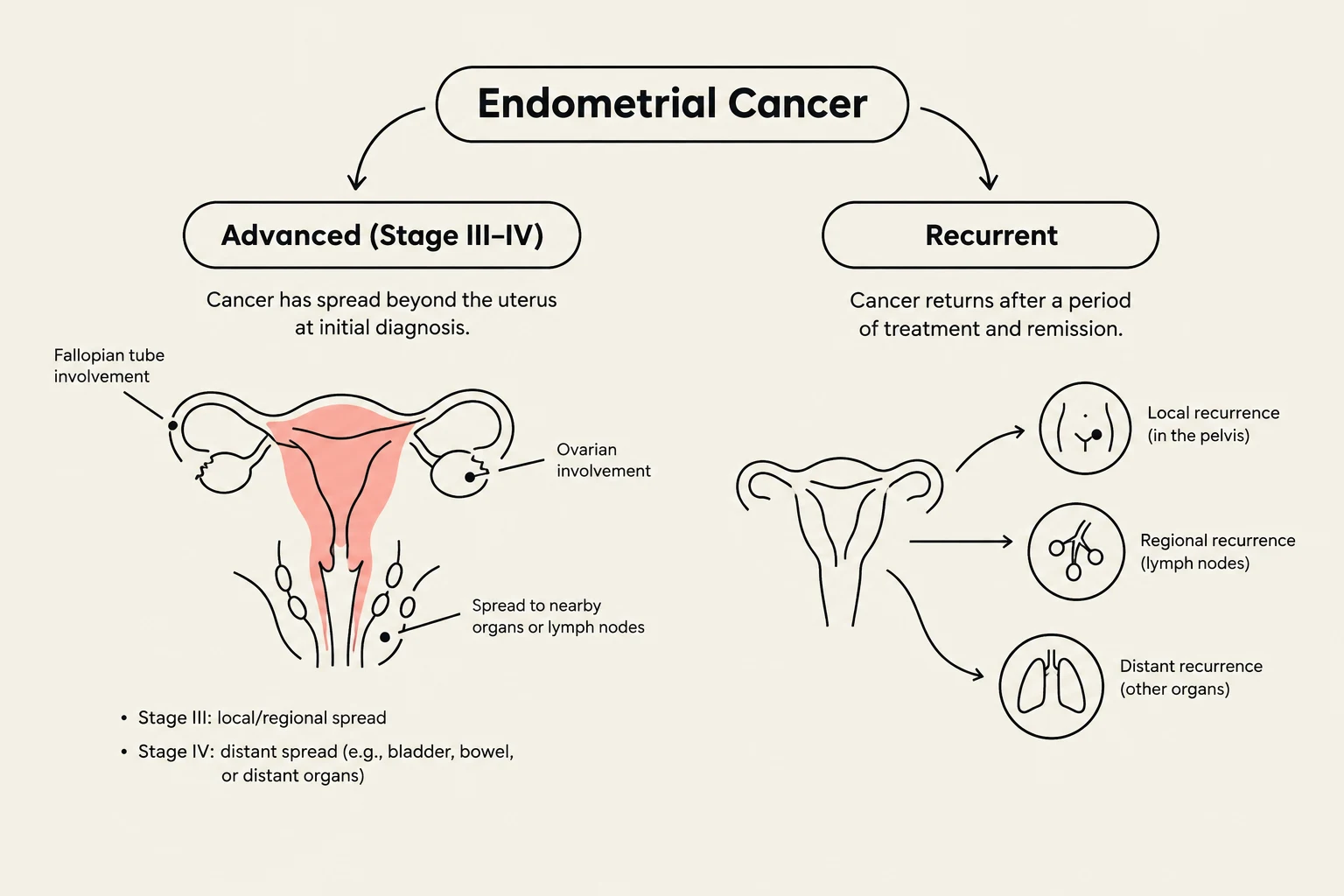
Advanced Endometrial Cancer typically refers to Stage III or Stage IV disease. This includes cancer that has spread beyond the uterus to the adjacent pelvic tissues, lymph nodes, or distant organs. For Stage III–IV tumors with measurable disease, systemic therapy is a cornerstone of management.
Recurrent Endometrial Cancer occurs when the disease returns after a period of remission following initial treatment. Management of recurrence is complex and depends heavily on whether the patient has previously received platinum-based chemotherapy.
Clinical Note: When evaluating a patient for recurrence, clinicians must determine if the disease is locoregional (confined to the pelvis) or distant (metastatic), as this dictates whether the focus should be on local control (radiation/surgery) or systemic therapy.
Molecularly Driven Therapies
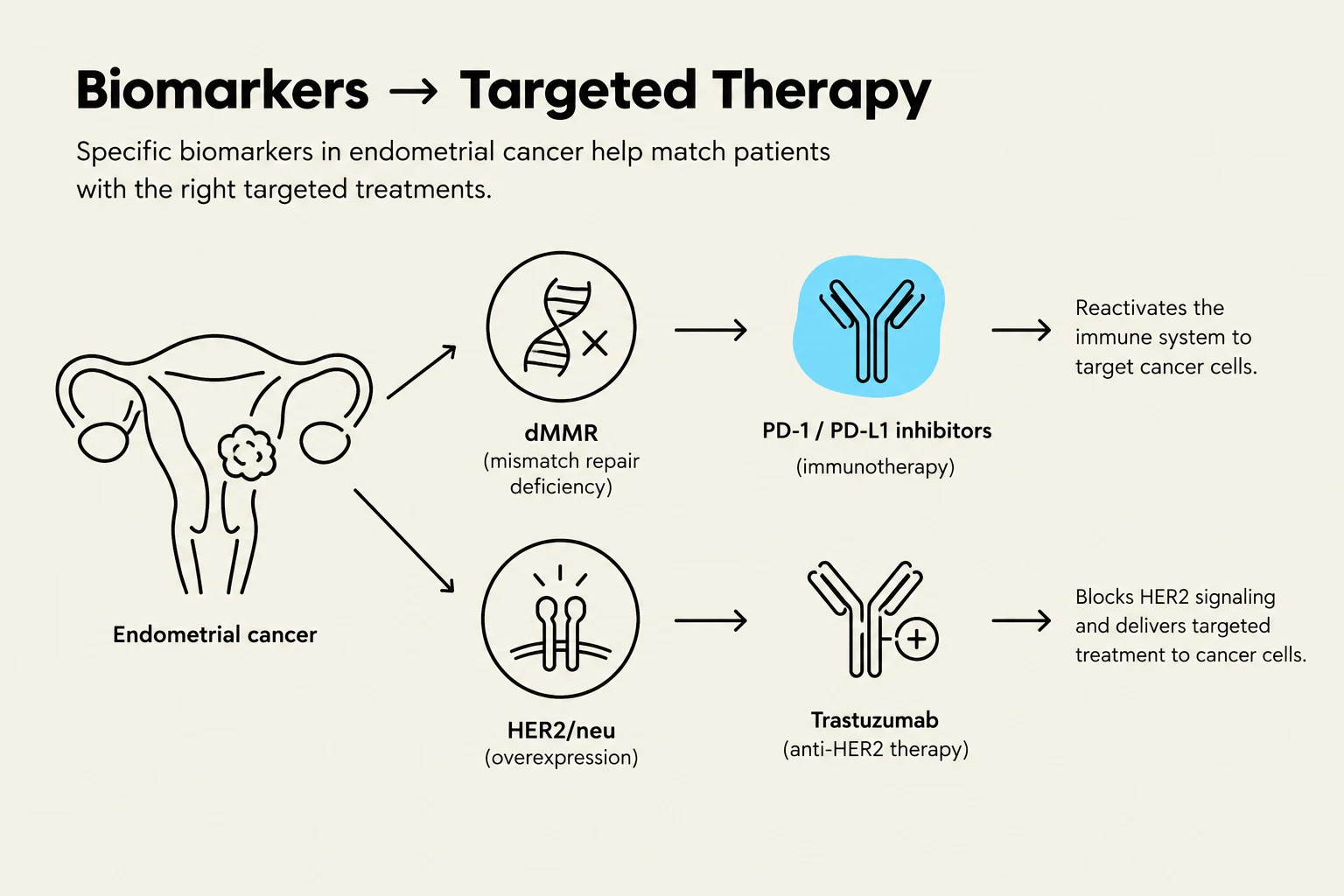
The advent of molecular profiling has introduced "biomarker-directed therapy," which allows clinicians to target specific vulnerabilities in the cancer cells.
Keep reading for free.
Create an account to finish this reading and make it part of your study routine.
Continue reading freeAlready have an account? Log in
Updated