Adult Health Exam Review: Cardiovascular, Hematology, GI, and Musculoskeletal Systems
A comprehensive review of key concepts in adult health, covering the cardiovascular, hematology, gastrointestinal, and musculoskeletal systems. This guide emphasizes pathophysiology, nursing assessment, pharmacology, and prioritization of interventions for common conditions and complications.
Preparing for the NR324 exam requires a systematic approach to understanding how physiological disruptions impact patient stability. This review focuses on four critical body systems, emphasizing the distinction between pathology, nursing assessment, pharmacology, and the prioritization of interventions. To succeed, you must not only recall facts but also apply them to clinical scenarios involving safety, delegation, and client education.
Cardiovascular System: Pathophysiology and Assessment
The cardiovascular system is a frequent focus of high-stakes testing. A primary distinction you must master is between Angina and Myocardial Infarction (MI). While both involve chest pain due to ischemia (lack of oxygen to the heart muscle), an MI involves actual tissue necrosis (death). When a client presents with chest pain, nursing priorities often involve obtaining a STAT ECG and assessing vital signs to determine the severity of the event.
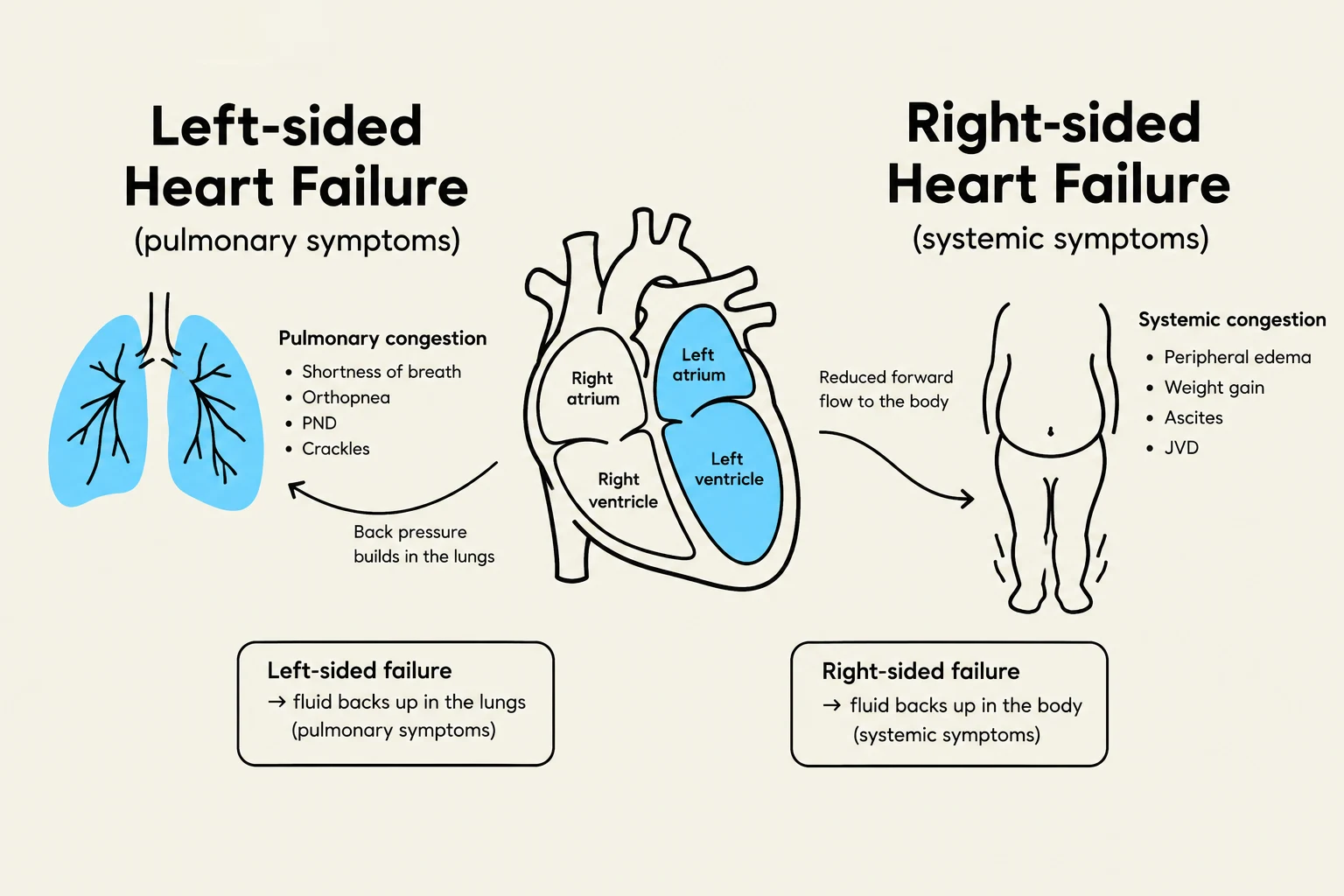
Heart Failure (HF) is categorized by the side of the heart that is failing:
Left-sided HF: Leads to pulmonary congestion (fluid in the lungs).
Right-sided HF: Leads to systemic congestion, often manifesting as peripheral edema.
Nursing management for HF includes monitoring for electrolyte imbalances, particularly potassium, as many patients take diuretics that can deplete these levels. Additionally, you must be able to recognize Cardiac Tamponade, a life-threatening complication of pericarditis where fluid builds up in the pericardial sac, necessitating a pericardiocentesis.
This diagram illustrates the differences between left-sided and right-sided heart failure, detailing their respective symptoms and effects on the body, such as pulmonary congestion and systemic congestion.
Other cardiovascular concerns include Hypertension, Shock, and Dysrhythmias. When interpreting an ECG, your first action in an emergency (such as a suspected cardiac arrest) is often to assess the client's pulse before proceeding to defibrillation or CPR.
Hematology: Oxygen Delivery and Blood Disorders
Hematological disorders often impact the body's ability to transport oxygen or maintain clotting capabilities.
Anemias and Clotting Disorders
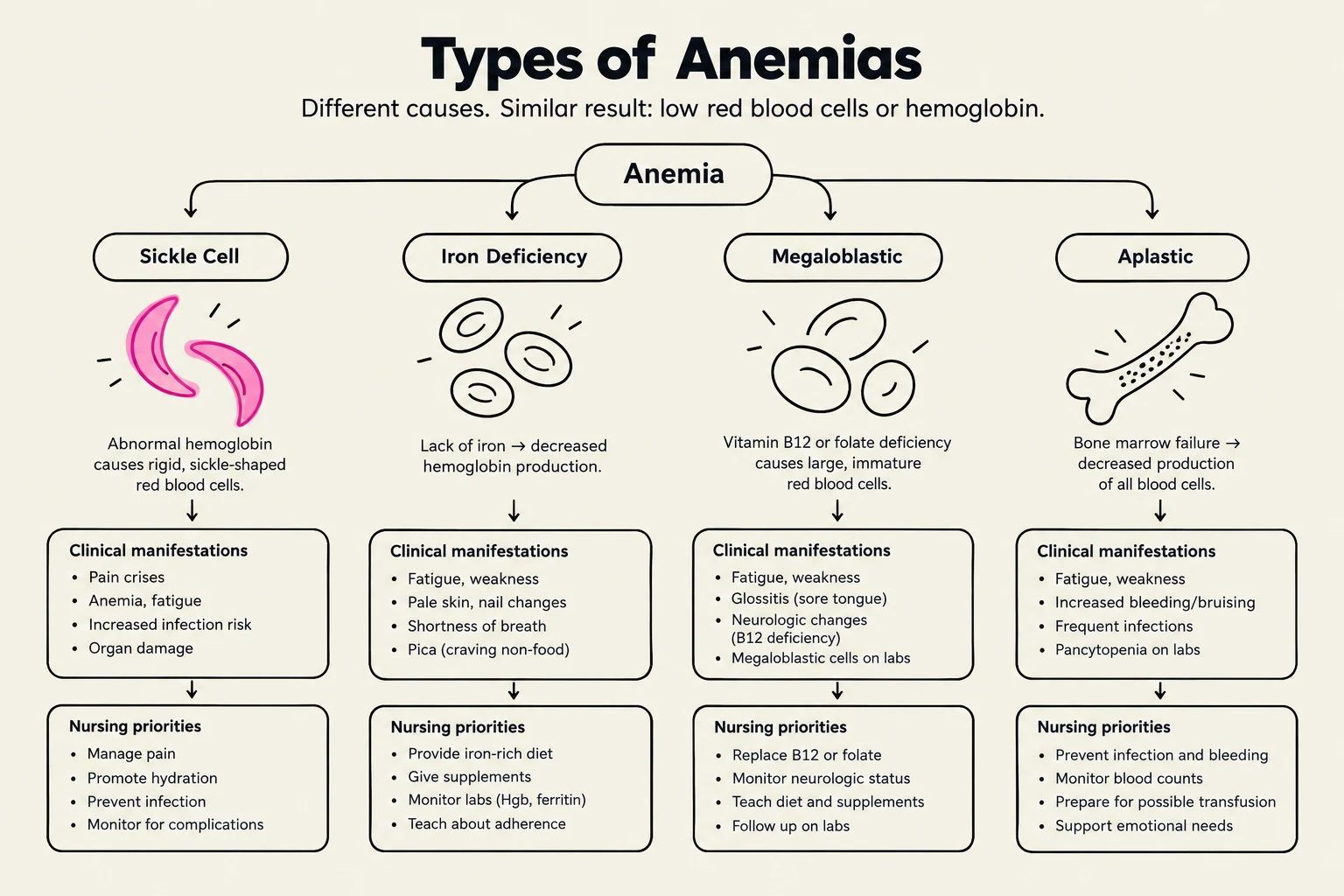
Sickle Cell Anemia: During a "sickle cell crisis," nursing priorities include managing pain with opioids and ensuring adequate hydration to prevent further sickling.
Pernicious Anemia: Caused by a Vitamin B12 deficiency.
Iron Deficiency Anemia: Requires nutritional interventions and potentially iron supplementation.
Thrombocytopenia: Characterized by a low platelet count, which significantly increases the risk of bleeding.
Hemophilia: A genetic disorder affecting clotting factors.
Transfusions and Safety
When administering blood products, nurses must be vigilant for Transfusion Reactions. A critical safety rule is that the nurse must remain with the client for the first 15 minutes of a transfusion to monitor for adverse reactions.
This diagram outlines the different types of anemias, including Sickle Cell, Iron Deficiency, Megaloblastic, and Aplastic anemia. It details their causes, clinical manifestations, and nursing priorities for each type.
Gastrointestinal (GI) System: Inflammation and Nutrition
GI nursing focuses on managing inflammation, preventing bleeding, and ensuring adequate nutritional status.
Common Pathologies include:
GERD (Gastroesophageal Reflux Disease): Management involves avoiding substances that decrease lower esophageal sphincter pressure, such as caffeine, chocolate, and fatty foods.
Peptic Ulcer Disease (PUD) and Gastritis: These involve inflammation or ulceration of the stomach lining.
GI Bleeding: A high-priority complication requiring rapid assessment and intervention.
Nutritional Support:
When a client cannot consume food orally, nurses must distinguish between Enteral (tube feeding) and Parenteral (IV nutrition) support. For example, after an esophagogastroduodenoscopy (EGD), the highest priority is assessing the client's gag reflex before allowing oral intake to prevent aspiration.
Musculoskeletal System and Mobility
The musculoskeletal focus is on maintaining mobility and preventing the devastating complications of immobility, such as Deep Vein Thrombosis (DVT).
Post-Operative and Immobilization Care
For clients in traction or undergoing orthopedic surgery, nurses must monitor pin sites for signs of infection (such as thick, yellow drainage). Post-operative care includes:
Ambulation and Incentive Spirometry (IS) to prevent respiratory complications.
Cluster Care: Grouping nursing activities together to allow the client periods of undisturbed rest.
Compartment Syndrome: A critical complication following a fracture or cast application. If a client complains of intense, unrelieved pain, the nurse must suspect impaired tissue perfusion or compartment syndrome.
Pharmacology and Bone Health
Pharmacology in this system includes Anticoagulants and Antiplatelets to prevent DVT, and Opioids for acute pain management. For bone health, such as preventing Osteoporosis, nurses educate clients that Vitamin D is essential because it increases the intestinal absorption of calcium.
Nursing Fundamentals: Prioritization, Delegation, and Safety
Across all systems, the NCLEX-style questions will test your ability to apply the nursing process.
Exam Tip: The "Analyze" Method
Read: Carefully identify the question and any "limiting words" (e.g., always, never, only).
Recall: Retrieve the specific pathophysiology or lab values associated with the concept.
Recognize: Look for keywords like increase vs. decrease or positive vs. negative.
Eliminate: Remove options that are incorrect or are not the priority action.
Delegation and Safety:
When delegating to an Unlicensed Assistive Personnel (UAP), remember that they can assist with tasks like brushing teeth or ambulating stable clients, but they cannot perform assessments, such as auscultating lung sounds or assessing urine output following a transfusion reaction. Always prioritize the client who is most unstable or shows signs of acute physiological distress.
Keep reading for free.
Create an account to finish this reading and make it part of your study routine.