Adolescence: Navigating Growth, Change, and Well-being
An overview of adolescence, covering the physical, biological, emotional, and behavioral transformations that occur during this developmental stage from childhood to adulthood. It also discusses key aspects of health and well-being, including nutrition, hygiene, physical activity, social responsibility, digital safety,
The journey of life is a series of transitions. Just as a seed requires nourishment to grow into a mature plant, humans undergo a complex period of development to reach maturity. This period, known as adolescence, is the developmental transition from childhood to adulthood, typically spanning from age 10 to 19. It is a time of rapid growth, marked by significant physical, biological, emotional, and behavioral transformations.
The Biological Drivers: Hormones and Puberty
At the heart of these changes are hormones—chemical messengers produced by the body that regulate growth and development. These hormones trigger puberty, the specific stage where the body undergoes both internal and external changes to become capable of reproduction.
While every individual experiences puberty at their own pace, certain physical markers become more prominent during this time. These include:
Secondary Sexual Characteristics: These are physical features that distinguish males from females but are not directly involved in the reproductive process. Examples include breast development in girls, facial or chest hair in boys, and changes in the shape of the shoulders.
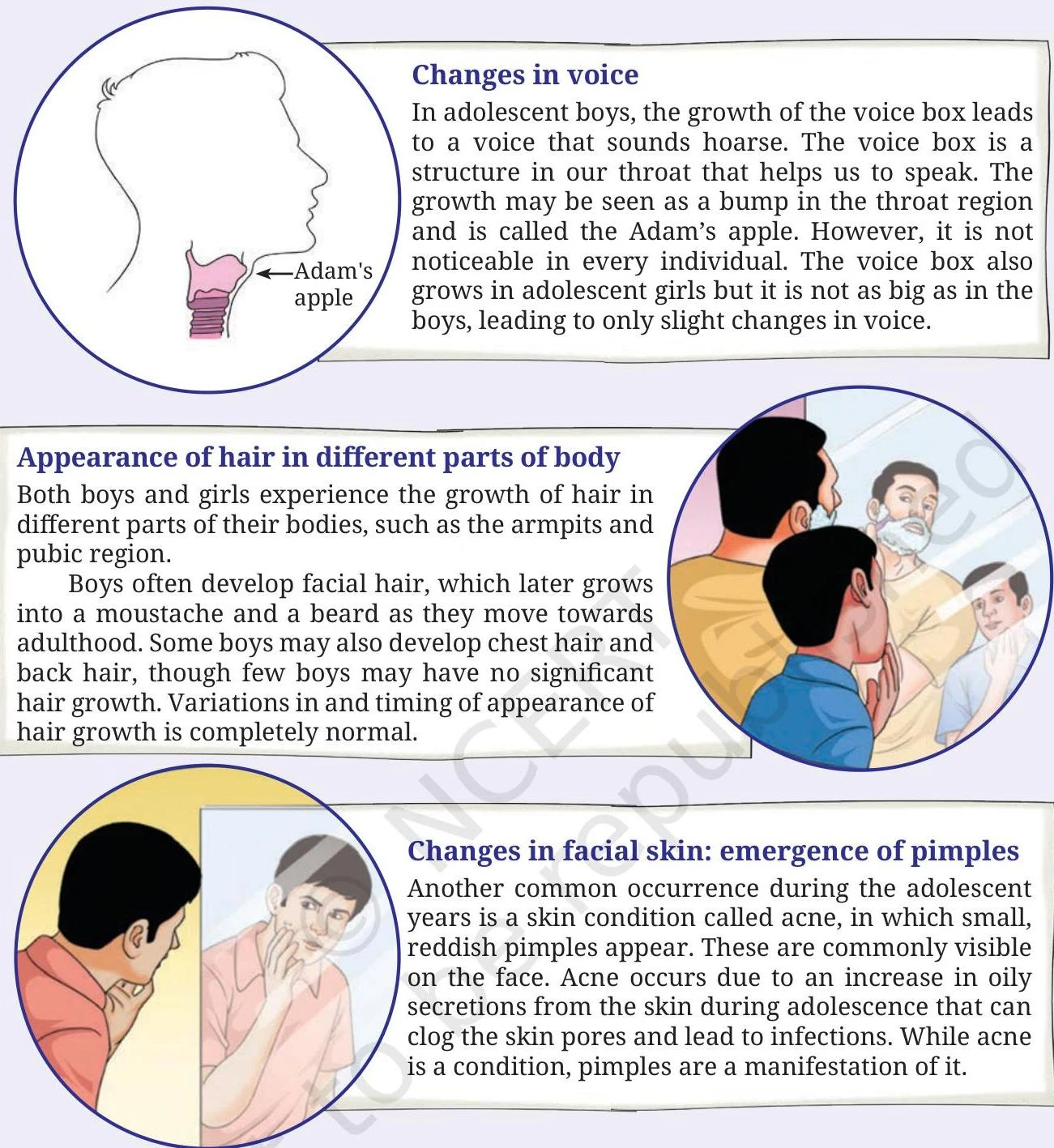
Voice Changes: In boys, the growth of the voice box (larynx) can lead to a hoarse voice and the appearance of the "Adam's apple". In girls, the voice box also grows, but the changes are usually more subtle.
Skin Changes: Increased oily secretions can lead to acne, which manifests as small, reddish pimples on the face.
This illustration depicts common physical changes during adolescence, including voice changes, hair growth, and skin conditions like acne.
Reproductive Maturation
Beyond visible changes, adolescence involves internal maturation of the reproductive system.
For girls, a key sign of reproductive health is the onset of the menstrual cycle, which typically recurs every 28–30 days. The specific phase where blood is discharged from the body is called menstruation. This is a natural process that usually continues until the age of 45–55, marking the end of reproductive capability.
Breaking Myths: Menstruation is a natural biological process. It is important to reject outdated myths or taboos—such as the idea that girls should be isolated during their periods—and instead embrace a scientific understanding of reproductive health.
Emotional and Behavioural Shifts
Adolescence is not just about the body; it is also about the mind. Because hormones influence more than just physical growth, adolescents often experience heightened emotions.
Emotional Changes: You may experience mood swings or increased sensitivity. One day you might feel energetic and happy, while the next you may feel low.
Behavioural Changes: These emotional shifts can lead to new behaviours, such as increased curiosity, a desire for self-exploration, or a drive to join social initiatives to help others.
Understanding how your emotions influence your actions can help you make more thoughtful decisions during this transformative time.
Pillars of Health and Well-being
To navigate this transition successfully, adolescents must focus on several key areas of health:
1. Nutritional Needs
Because the body is growing so rapidly, a balanced diet is essential.
Proteins: For growth and strength.
Carbohydrates: To provide necessary energy.
Calcium: For optimal bone growth.
Iron: To assist in the formation of blood and prevent deficiencies like anemia.
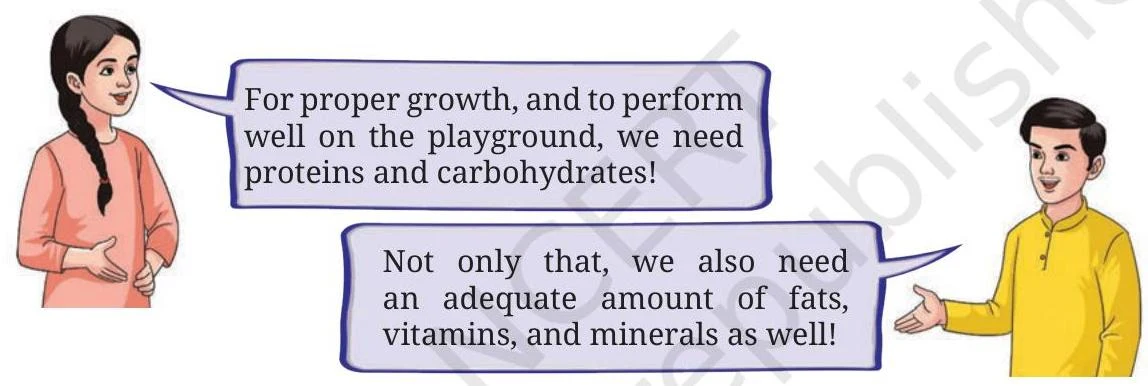
For proper growth and to perform well, we need proteins, carbohydrates, fats, vitamins, and minerals.
2. Personal and Menstrual Hygiene
Maintaining cleanliness is vital to prevent infections, particularly in the armpits and pubic regions. For girls, practicing good menstrual hygiene is crucial for both comfort and health. This includes using sanitary pads or reusable cloth pads and disposing of them responsibly by wrapping them in newspaper and placing them in a dustbin.
Note on Support: Many governments provide support through initiatives like the Menstrual Hygiene Scheme (MHS) to ensure adolescent girls have access to affordable sanitary products.
3. Physical Activity
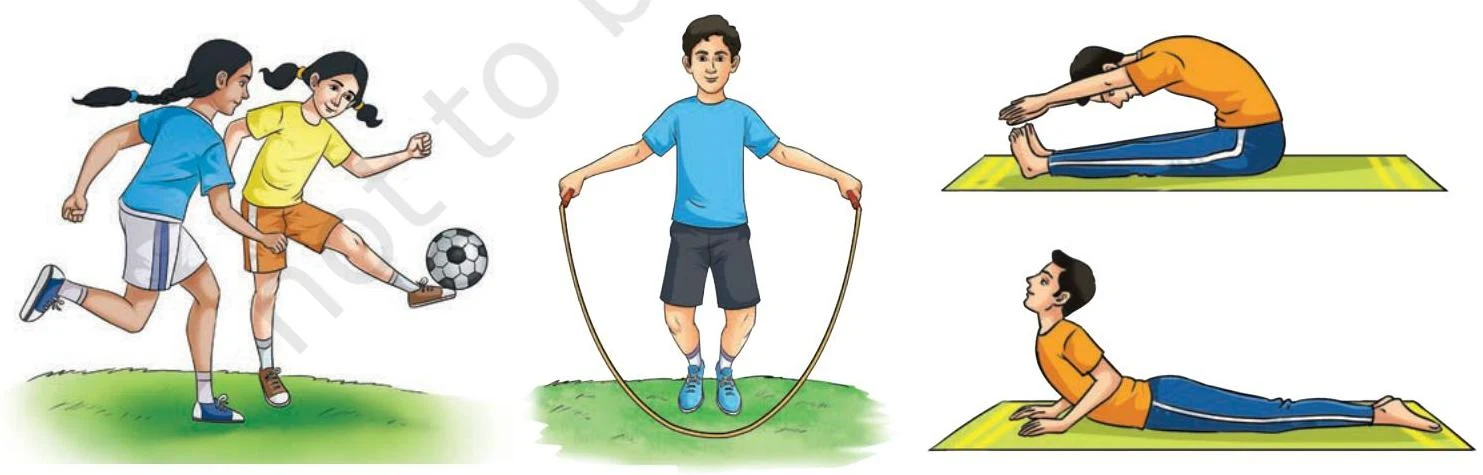
Regular exercise is a powerful tool for adolescents. Engaging in sports, yoga, or general physical activities helps build stamina, maintains fitness, and can even boost your mood.
Children playing soccer, a boy jumping rope, and two boys doing yoga poses.
4. Social Responsibility and Digital Safety
As adolescents become more social, they must learn to interact respectfully with others, both in person and online.
In-person: Practice kindness and collaboration.
Online: Be cautious about sharing personal information or photos with strangers. Avoid cyberbullying, which involves using digital devices to harass or spread false rumours about others.
5. Avoiding Substance Abuse
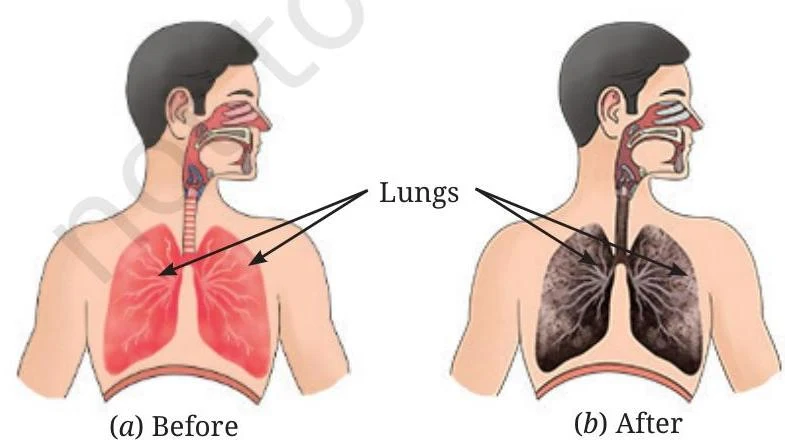
One of the most critical skills an adolescent can learn is how to "say NO" to addictive substances like tobacco, alcohol, and drugs. These substances can cause permanent damage to the lungs, memory, and mental health.
Diagram illustrating the difference in lung appearance before and after exposure to harmful substances.
Exam Tip: Remember that addiction often starts with "just one time." Being firm and confident in your decision to avoid these substances is the best way to protect your future.
By staying informed and making healthy choices, you can turn the challenges of adolescence into a period of joyful and meaningful growth.
Keep reading for free.
Create an account to finish this reading and make it part of your study routine.