


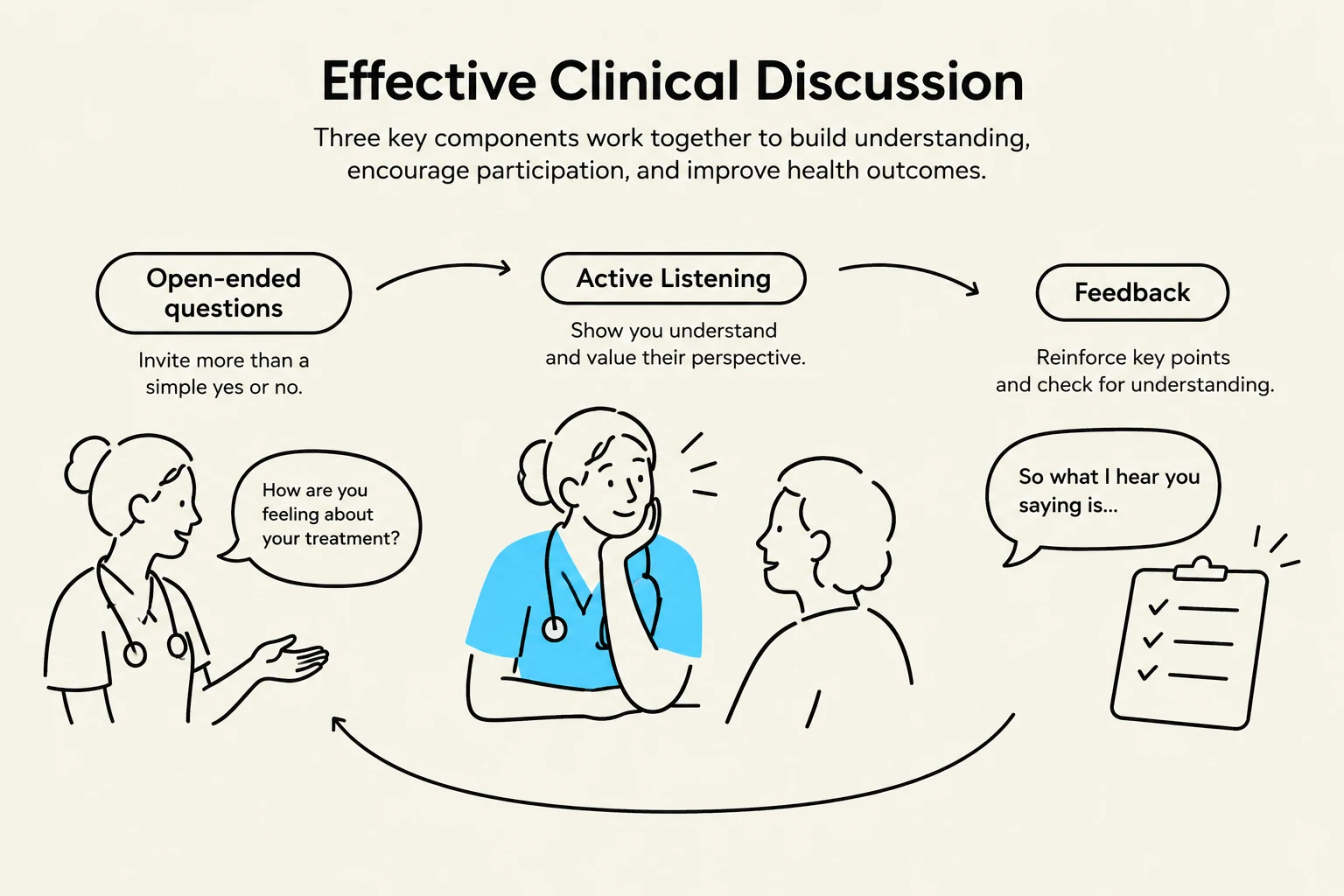
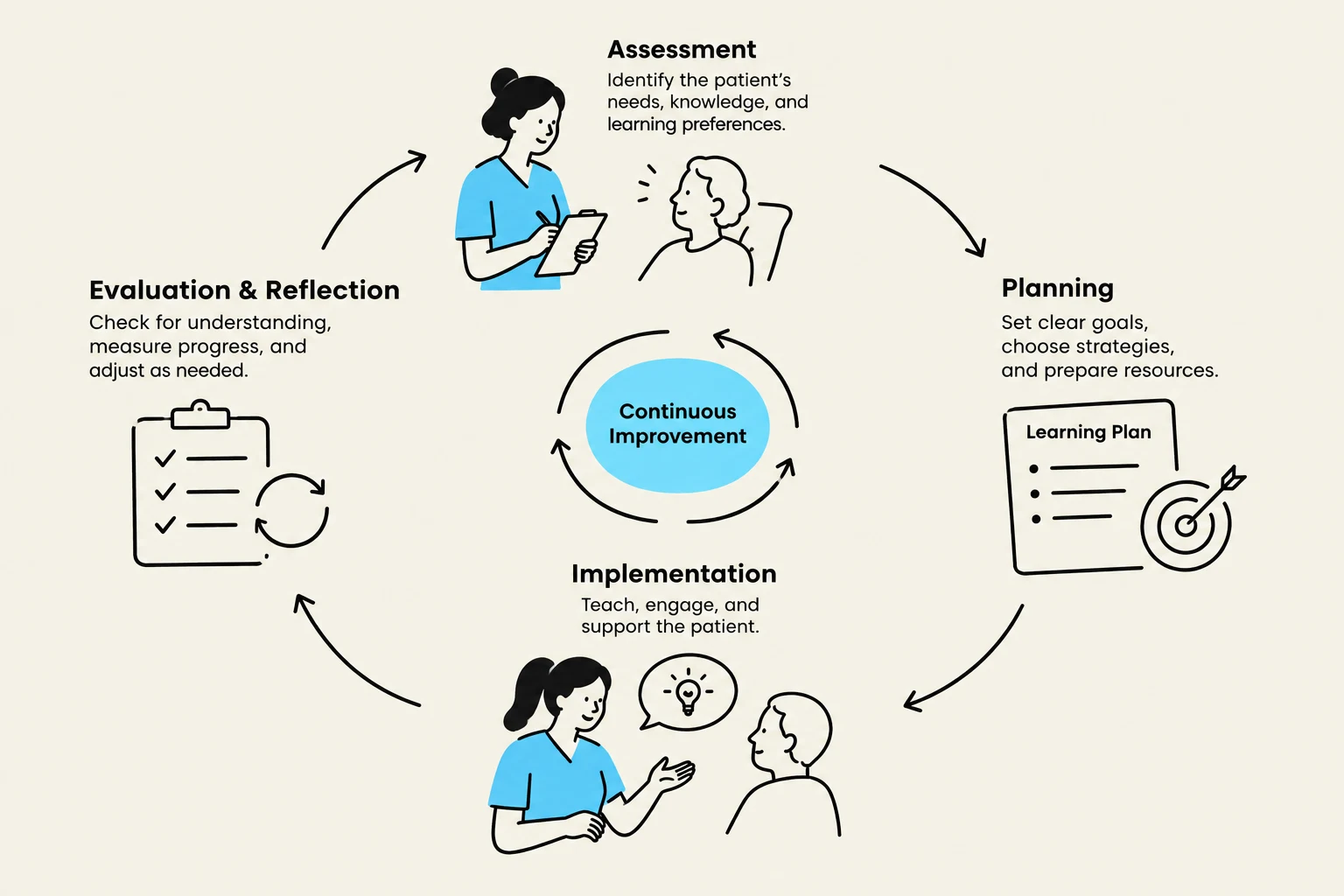
In the clinical setting, the goal of patient education is not merely the transmission of information, but the transformation of knowledge into actionable behavior. Traditional "passive" teaching—where a clinician speaks while a patient listens—often fails because it does not account for the cognitive load, anxiety, or physical limitations a patient may face. To ensure safety and adherence, healthcare providers must employ active teaching methods. These strategies shift the patient from a spectator to a participant, utilizing techniques such as role modeling, discussion, demonstration, and discovery learning to foster engagement and long-term retention.
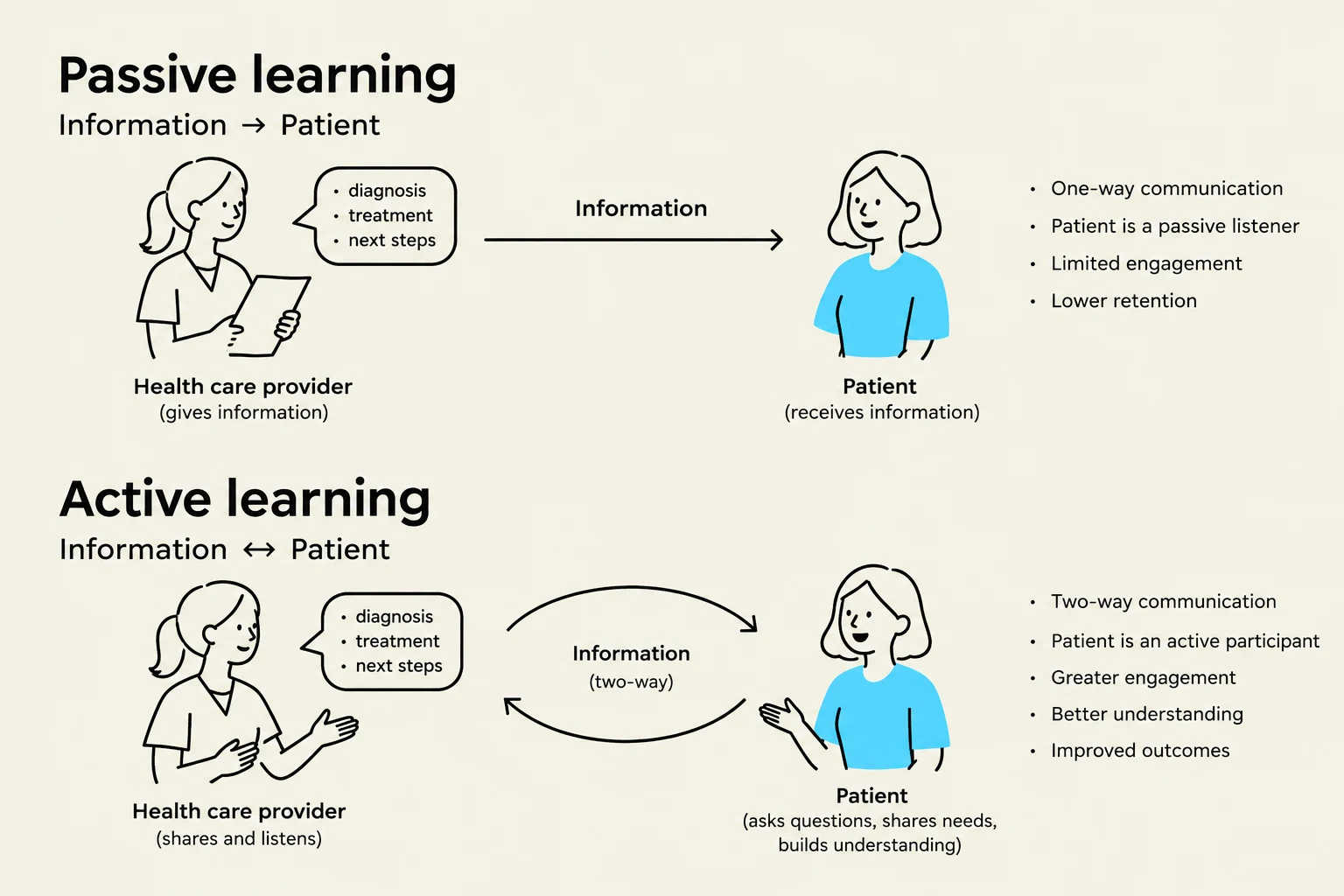
The Shift from Passive to Active Learning
Passive learning occurs when a patient receives information without being required to process it or apply it immediately. While this might seem efficient, it often leads to "illusion of competence," where a patient nods in agreement but cannot replicate the necessary skills at home.
Active teaching, conversely, requires the patient to engage their cognitive and motor skills. By involving the patient in the process, the educator helps bridge the gap between understanding a concept and performing a task. This engagement is critical for complex self-care regimens, such as insulin administration or wound care.
Exam Tip: If a question asks for the most effective way to evaluate if a patient has learned a new physical skill, look for "return demonstration" rather than "verbal explanation."
Core Active Teaching Strategies
To build a comprehensive teaching plan, clinicians can draw from four primary active methods. Each serves a unique purpose depending on the complexity of the skill and the patient's learning style.
Keep reading for free.
Create an account to finish this reading and make it part of your study routine.
Continue reading freeAlready have an account? Log in
Updated