


Gastroesophageal reflux disease (GERD), peptic ulcers, and gastritis are often driven by an imbalance between gastric acid production and the protective mechanisms of the stomach lining. When the stomach produces excessive hydrochloric acid (), it can irritate the esophageal mucosa or erode the gastric lining. Acid suppression therapy is a cornerstone of pharmacological management, designed to reduce the acidity of the gastric environment to allow for mucosal healing and symptom relief.
The Mechanism of Gastric Acid Production
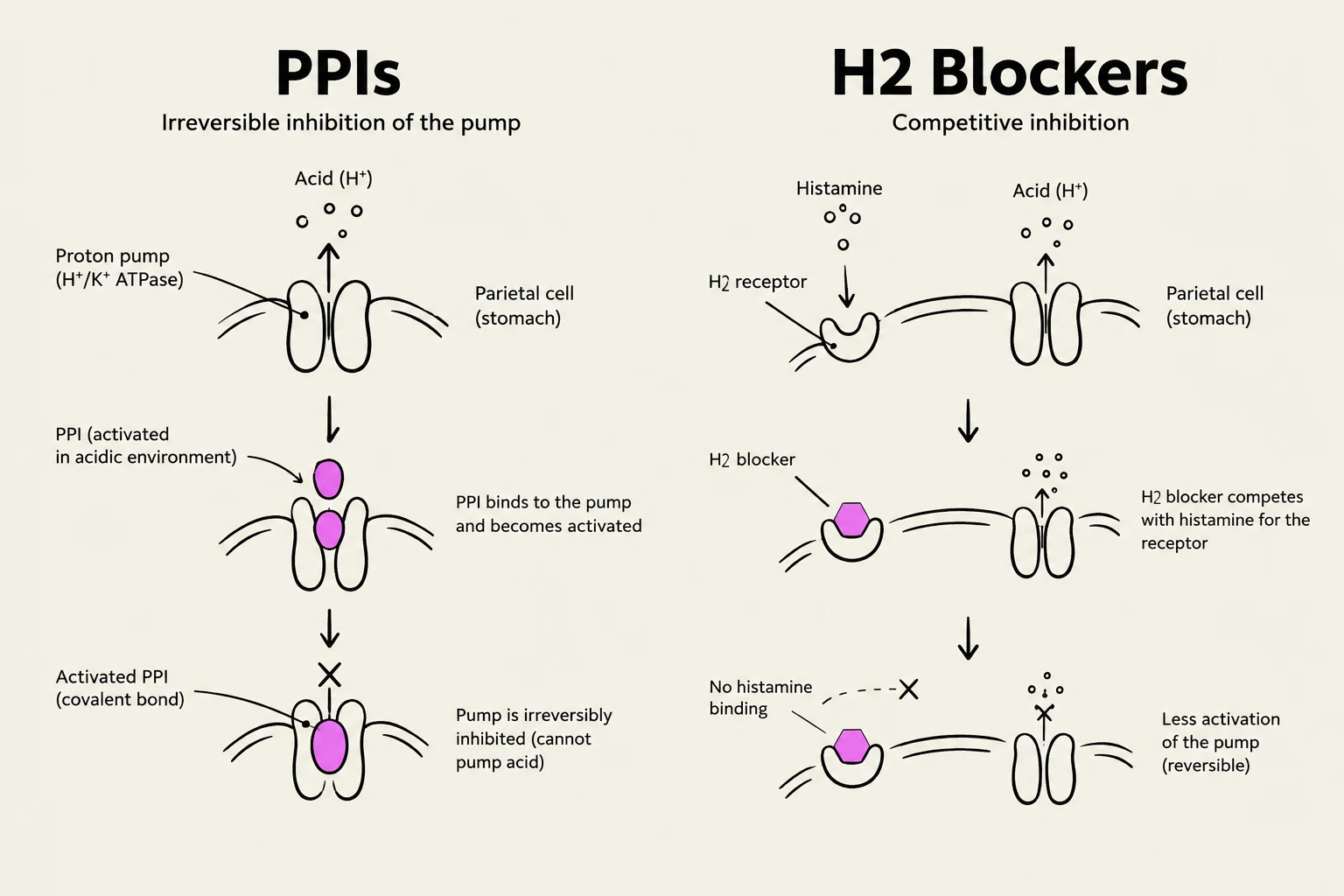
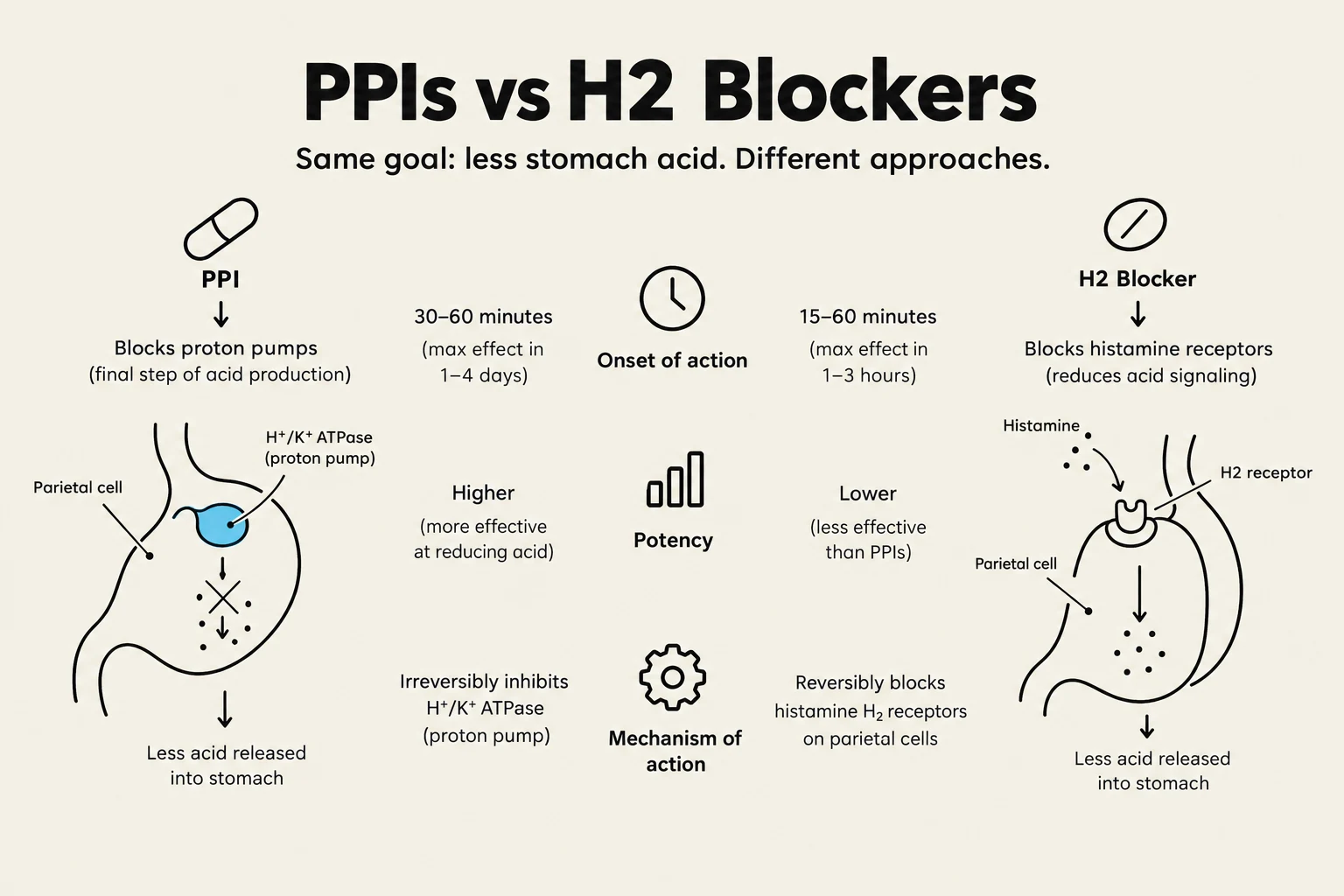
To understand how medications work, we must first understand how the stomach produces acid. The parietal cells, located in the lining of the stomach, are responsible for secreting hydrogen ions ($H^+$) into the gastric lumen. This process is driven by the $H^+/K^+$-ATPase enzyme, often referred to as the "proton pump."
When the body receives signals (such as gastrin or histamine), these pumps activate, moving hydrogen ions into the stomach in exchange for potassium ions. The result is a highly acidic environment necessary for digestion, but one that can become pathological if left unchecked.

Proton Pump Inhibitors (PPIs)
Proton Pump Inhibitors (PPIs) are considered the most potent class of acid-suppressing medications. Unlike other drugs that merely block the signals telling the cell to make acid, PPIs target the final step of the process: the proton pump itself.
Keep reading for free.
Create an account to finish this reading and make it part of your study routine.
Continue reading freeAlready have an account? Log in
Updated