


Accounting is far more than just "keeping the books." It is the systematic process of recording, classifying, summarizing, and interpreting financial transactions and events. For any business to succeed, stakeholders—ranging from internal managers to external government agencies—must be able to read, understand, and analyze accounting reports to make informed decisions.
The Unified Profession: The CPA Designation
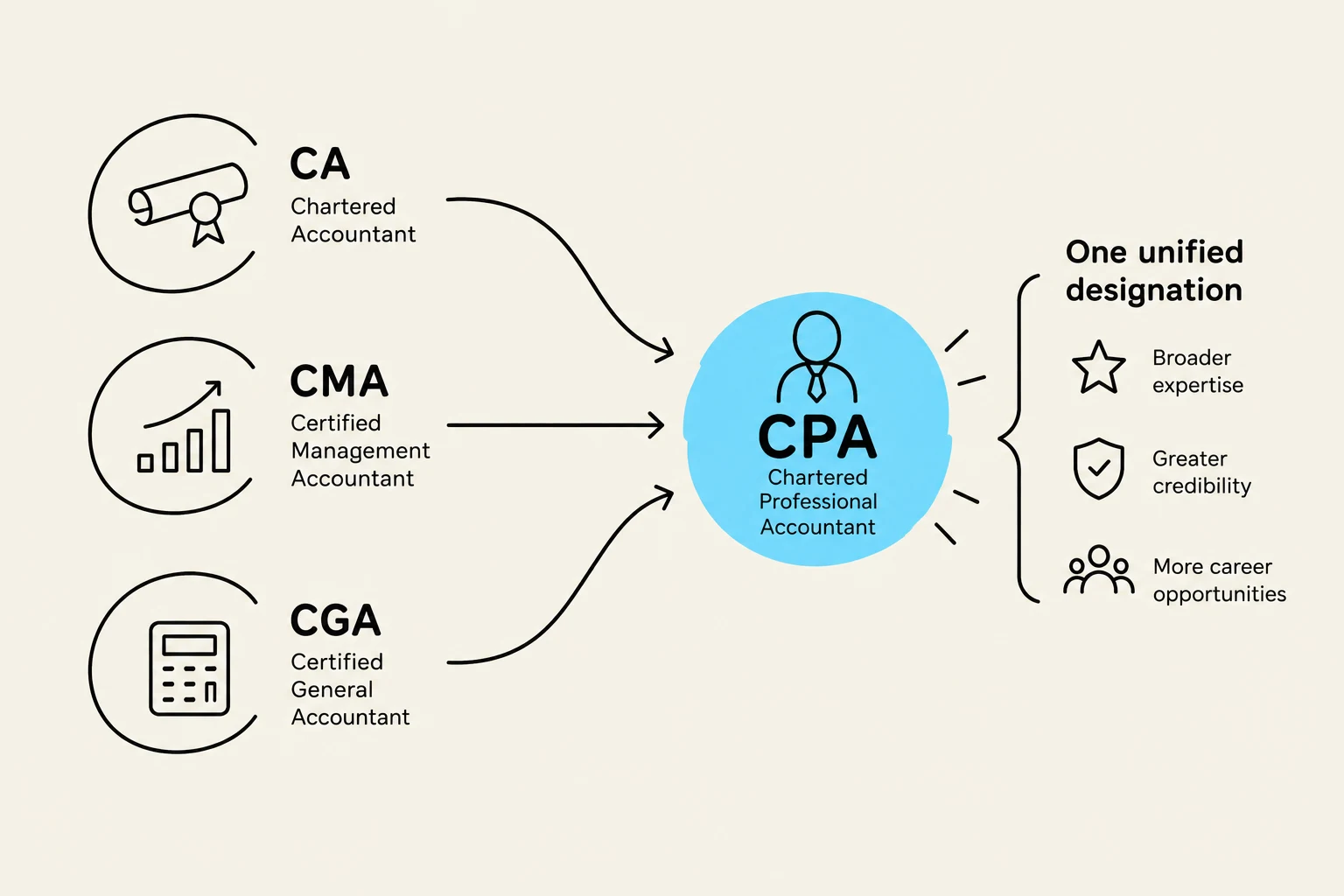
Historically, the Canadian accounting landscape was divided into several distinct professional bodies. These included the Chartered Accountants (CA), who were widely recognized as leading financial professionals; the Certified Management Accountants (CMA), who focused on management-related requirements; and the Certified General Accountants (CGA).
To create a single, unified profession that could represent Canadian accountants at a national and international level, these organizations integrated to form the Chartered Professional Accountant (CPA) designation. Today, the CPA is the internationally recognized standard for accounting excellence in Canada.
Private vs. Public Accountants
Regardless of their specific designation, accountants generally operate in one of two primary sectors:
- Private Accountants: These professionals work internally for a single specific organization, such as a corporation, a government agency, or a non-profit organization.
- Public Accountants: These individuals provide services to various clients (individuals or businesses) on a fee basis. They often work through independent firms and can offer a wide range of services, including consulting and auditing.
Exam Tip: If a question asks about an accountant working "in-house" for a single company, they are referring to a Private Accountant. If they are providing services to multiple clients for a fee, they are a Public Accountant.

Keep reading for free.
Create an account to finish this reading and make it part of your study routine.
Continue reading freeAlready have an account? Log in
Updated